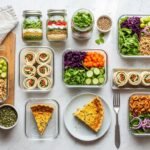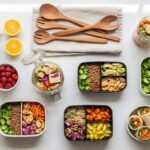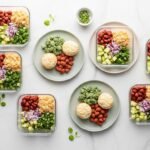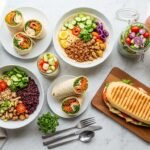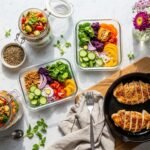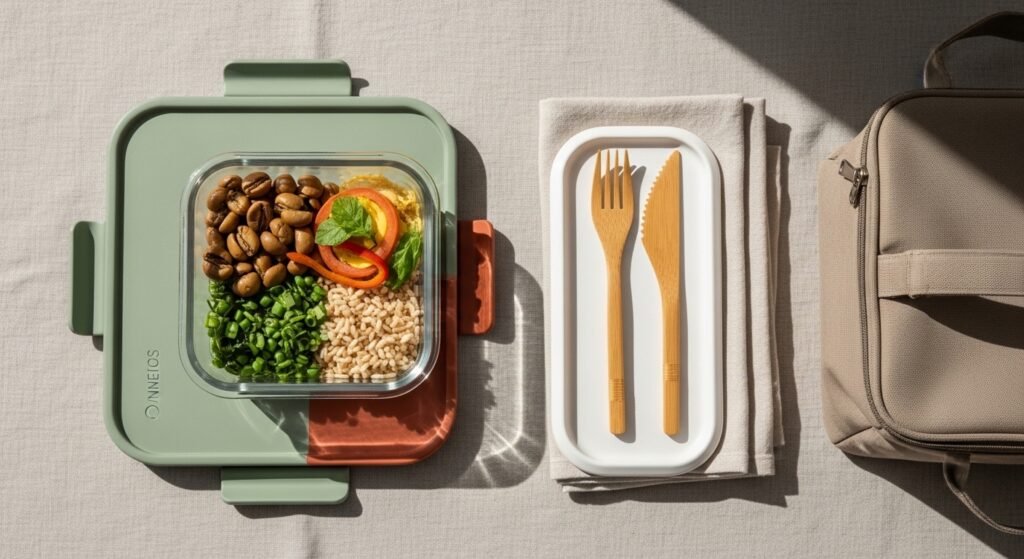
You know the scramble: midday hunger, unfamiliar options, or soggy salad that looked great in the morning. Building the perfect work lunch box fixes that — predictable portions, fresh textures, and a tasty bite every time. This guide shows you how to plan, cook, and pack a high-protein, 30-minute-friendly lunch box that lasts through a busy week.
The secret is good gear and simple rules. I rely on airtight glass containers to keep things crisp and an insulated lunch bag that fits a food jar and ice pack. With those, you’ll avoid leaks and keep food at the right temp.
Read on to learn quick portioning, one-pan protein ideas, assembly tips that prevent sogginess, and safe storage windows. You’ll pack smarter lunches in under 30 minutes.
Planning Portions & Quick Meal-Prep (High-Protein, 30-minute)
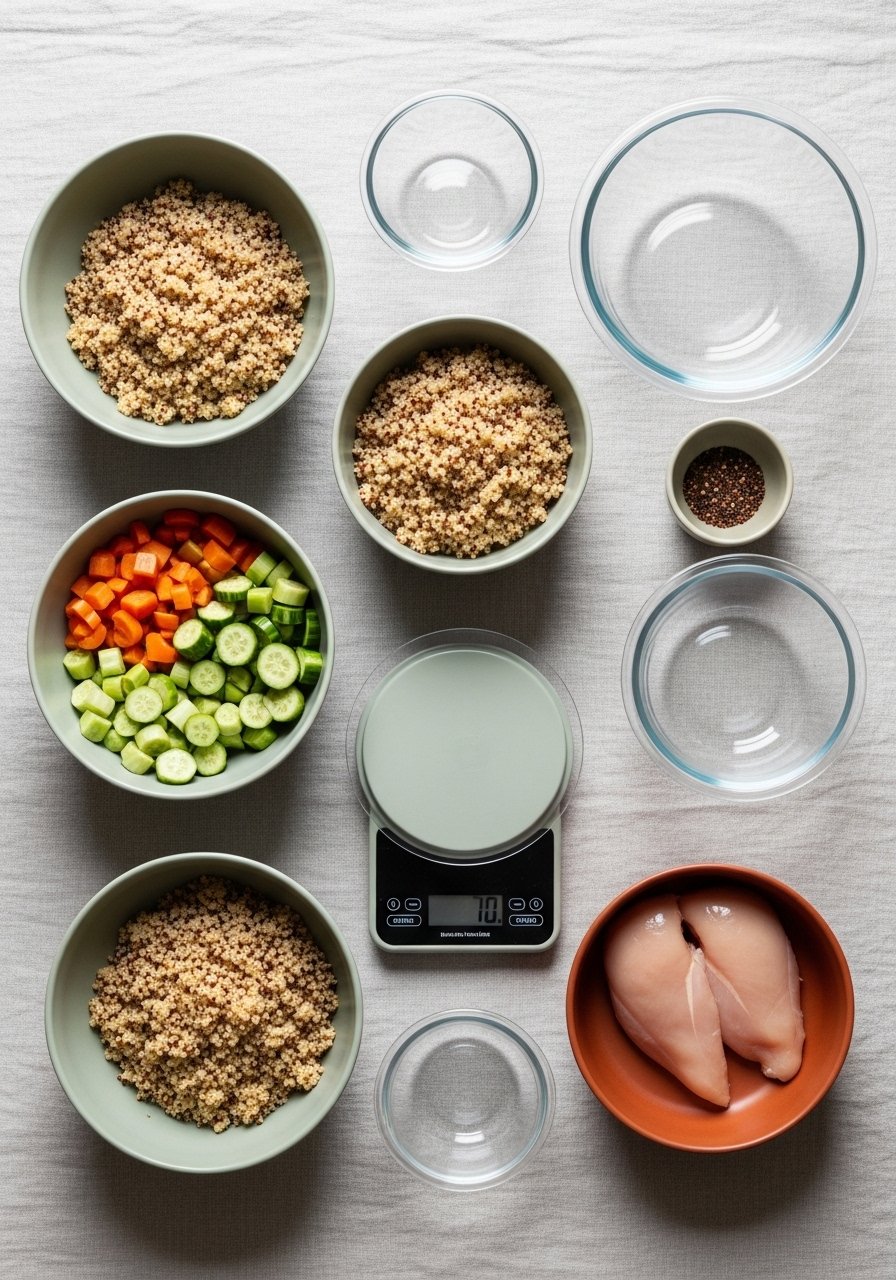
Start by deciding your macro balance: aim for roughly 25–35g protein, 30–50g carbs, and a serving of veggies. Use a digital kitchen scale to portion proteins and carbs fast — 4–6 oz (115–170g) cooked protein per lunch is a good rule. Pre-cook grains like quinoa or rice in batches; it’s a 15–20 minute hands-off step.
- Use glass meal prep bowls to portion meals for the week.
- Cook proteins ahead and refrigerate up to 3–4 days; vegetables typically stay crisp 2–3 days when stored separately.
Quick tip: double a recipe and freeze one portion flat for later.
One-Pan & 20–30 Minute Cooking Techniques
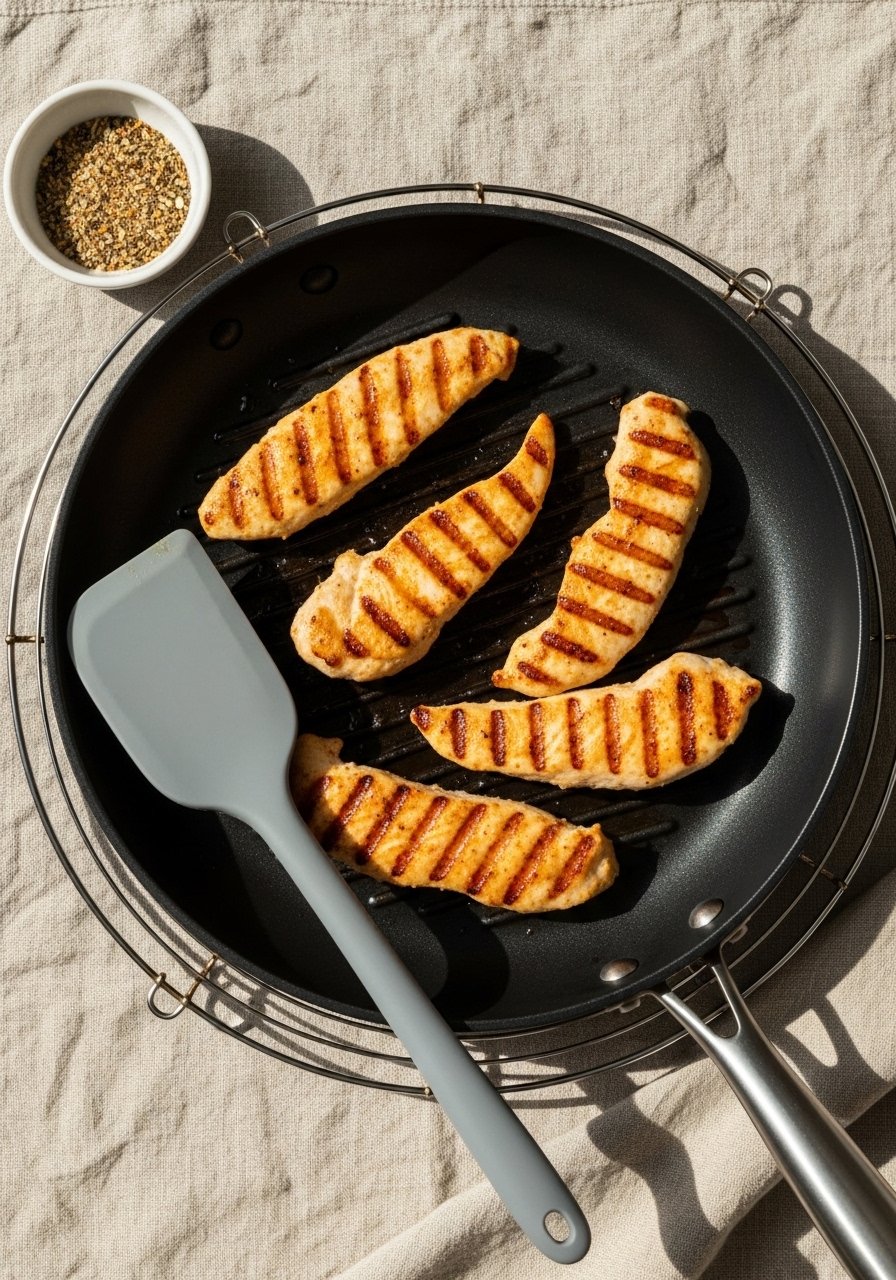
If you’re short on time, a single-pan method wins. Sear thin chicken breasts or turkey cutlets in a non-stick sauté pan for 6–8 minutes per side or until cooked through. Use an instant-read thermometer to check doneness — 165°F for poultry.
- Sauté vegetables on medium-high for 5–7 minutes; add greens last so they stay bright.
- Rest cooked protein 5 minutes before slicing to keep juices locked in.
- Flavor with a quick sauce whisked in the pan (olive oil, lemon, mustard).
These one-pan recipes are ideal when you prep lunches for 2–3 days in one session.
Assembly Tips to Keep Everything Crisp
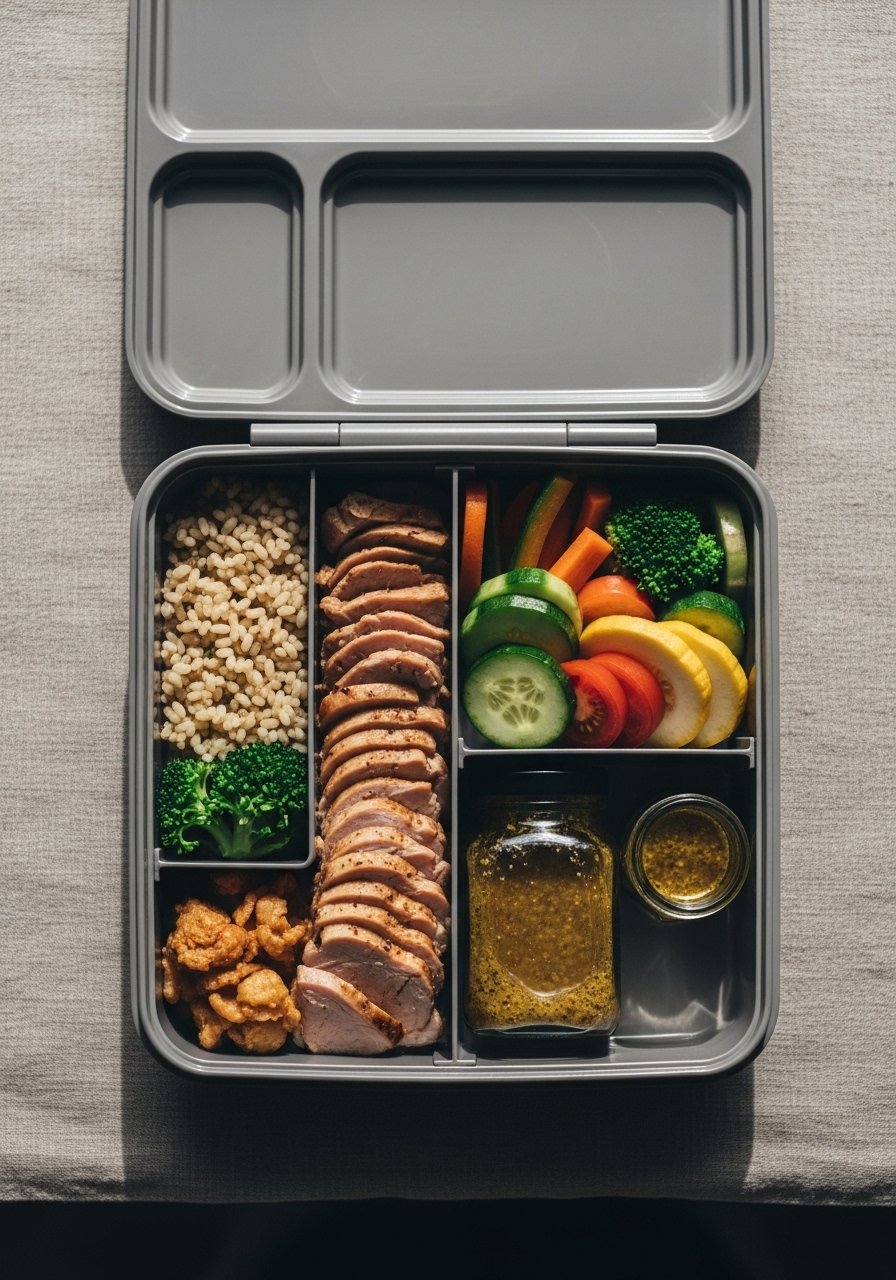
How you layer a work lunch box matters. Keep wet elements separate until eating to avoid soggy greens.
- Store dressings in small glass jars and pack them upright.
- Use a compartmentalized bento box for visual balance and portion control.
- Add a lemon wedge or a small olive oil packet to brighten flavors.
Numbered assembly:
- Base: grains or salad greens.
- Protein: sliced and packed tight.
- Veggies: roasted or raw in a separate compartment.
- Finish: dressing jar tucked beside and a reusable ice pack if needed.
Small choices like this make the difference between a fridge surprise and a lunch you actually look forward to.
Storage, Reheating & Transport (Meal Prep Safety)
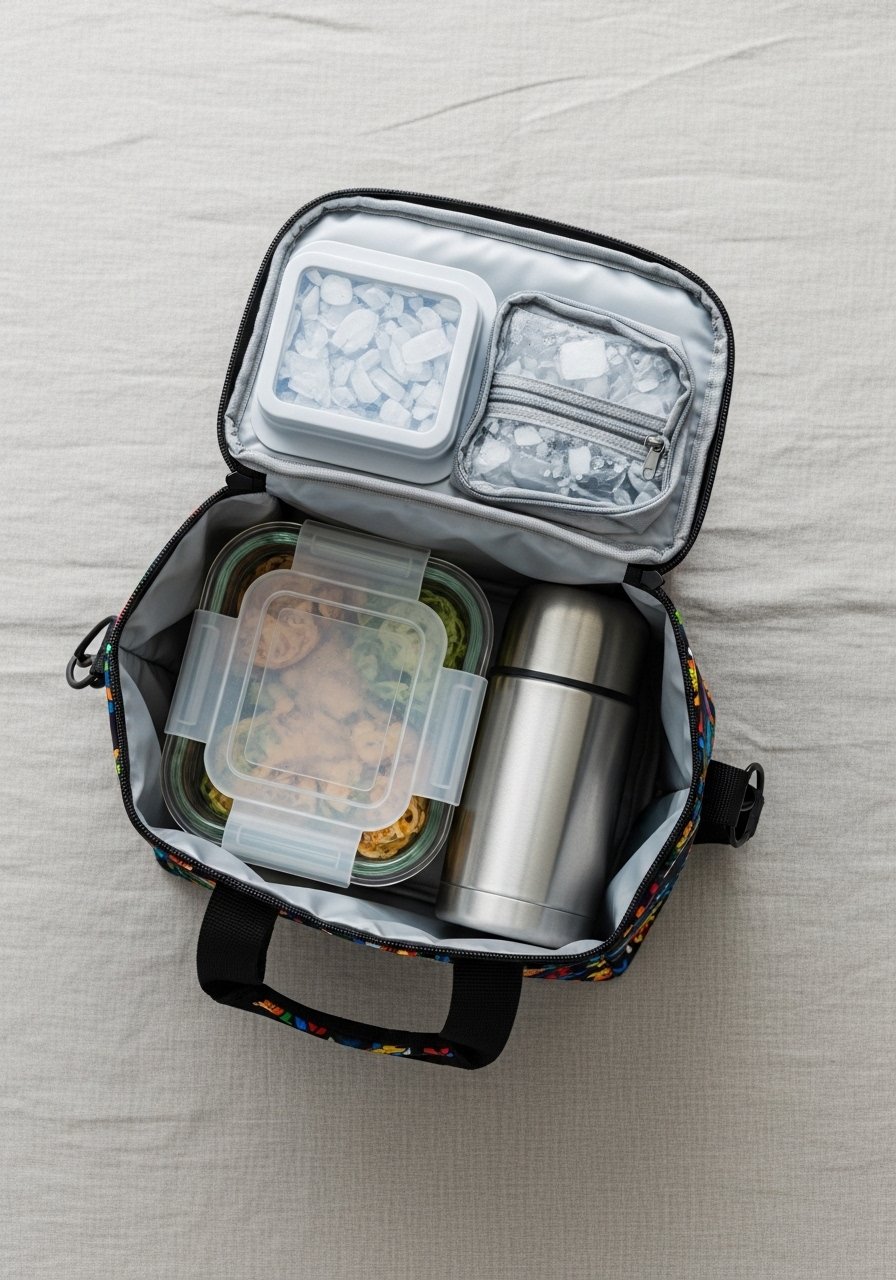
Transport and reheating matter for a dependable work lunch box. Keep hot and cold items separated.
- Pack a reusable ice pack to keep salads and dairy-safe.
- Use an insulated thermos for soups or stews; they stay hot for hours.
- Refrigerate cooked items within 2 hours and consume refrigerated meal-prepped dishes within 3–4 days.
Reheating tip: transfer glass container lid-free to microwave-safe settings, or reheat on stovetop when possible for even texture.
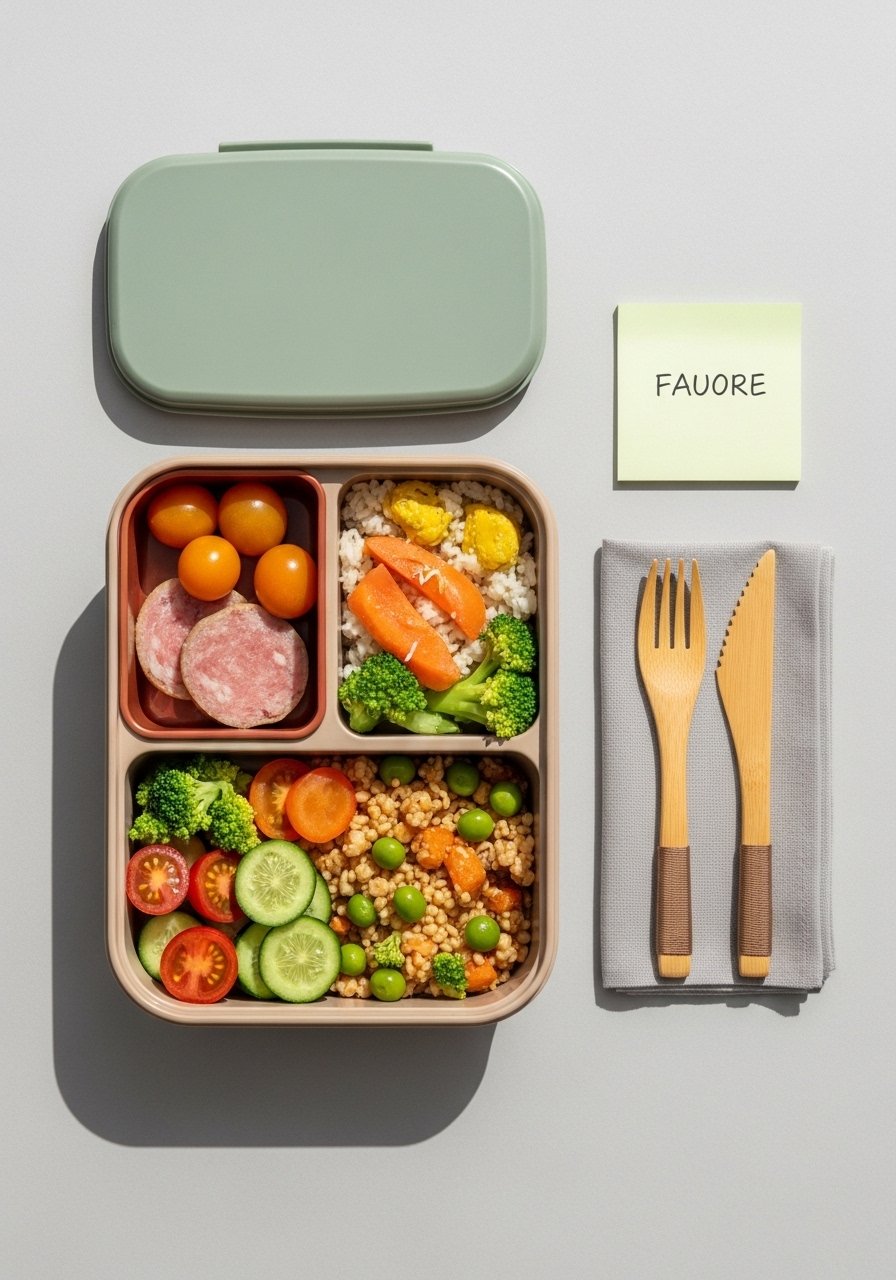
You’ve got the steps — portioning, fast cooking, smart layering, and safe storage. Start with one recipe, tweak flavors, and you’ll be packing a reliable work lunch box that actually tastes as good at noon as it did fresh. Save this guide, pin it for quick reference, and share with friends who want easier weekday lunches. Which lunch combo will you try first?
Once you find a system, reliable airtight glass containers make the whole routine work — grab a set and start prepping. Pin this guide and get packing!