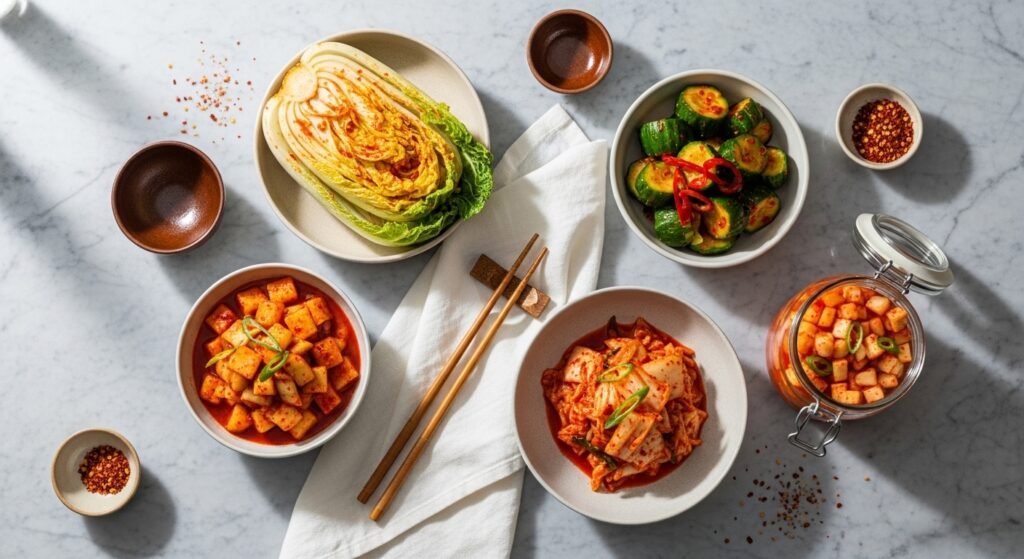
If you love bold, tangy, spicy flavors and the satisfying crunch of well-fermented vegetables, you’re in the right place. This collection of 27 authentic traditional kimchi recipes gives you the full spectrum—from classic napa cabbage to quick refrigerator versions and unique regional favorites. Read through and you’ll find easy-to-follow traditional kimchi recipe methods, plus vegan and low-salt swaps so you can adapt recipes to your pantry and diet.
You’ll see clear prep times, fermentation cues, and exact measurements so your batch turns out consistently. I often prep ingredients with my chef’s knife and lay jars out on a silicone baking mat for easy cleanup. Pin the ones you love and grab a jar—fermentation is one of the most rewarding kitchen projects you’ll try.
1. Classic Napa Cabbage Kimchi (Traditional Kimchi Recipe)
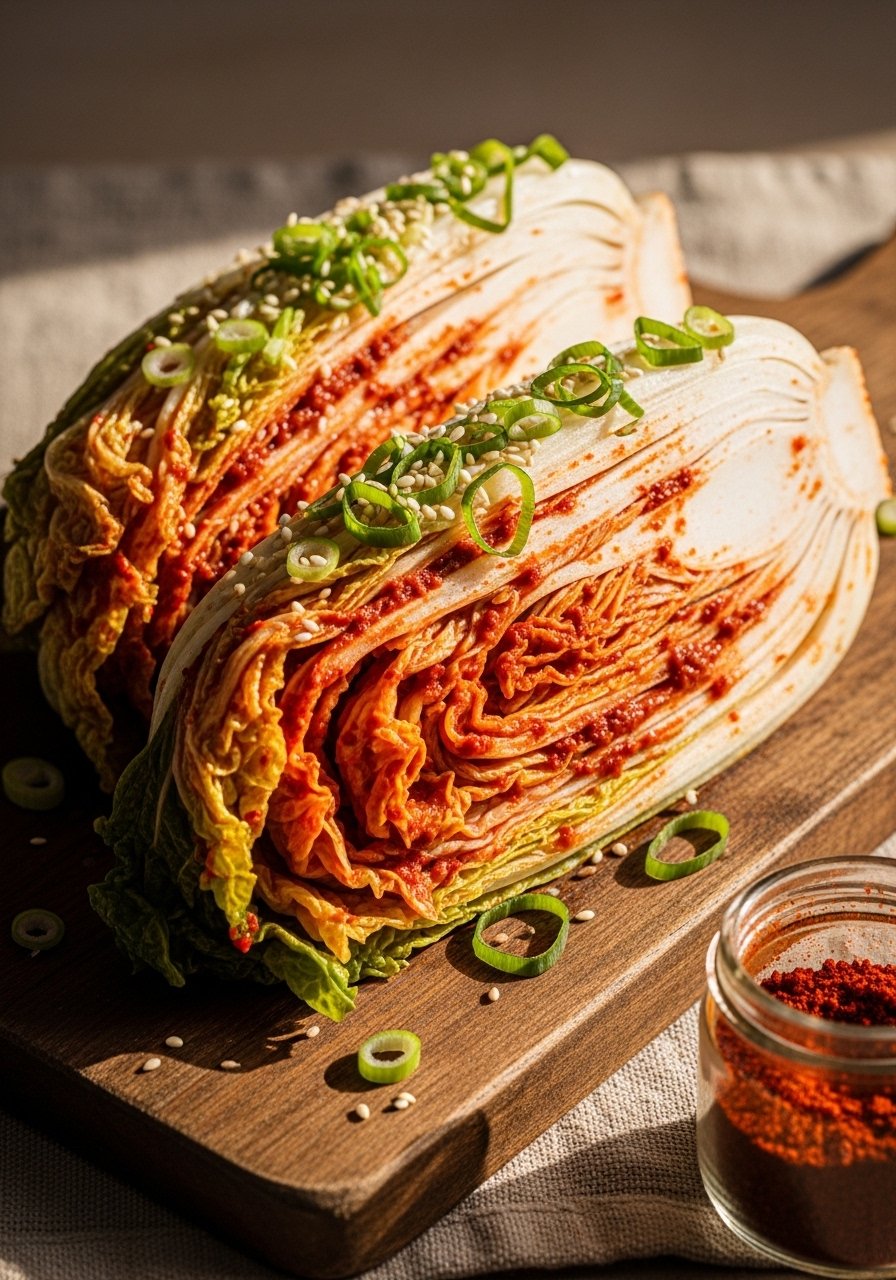
This is the traditional kimchi recipe most people picture: crunchy napa leaves coated in a garlicky, gingery red pepper paste. It’s balanced—salty, spicy, a touch sweet—and ferments to a lively tang. Ideal for weeknight sides or kimchi fried rice lovers. You’ll love the fragrance as it starts bubbling.
Ingredients
- 2 heads Napa cabbage (about 6–8 lb total)
- 1 cup kosher salt (for brining)
- 8 cups water
- 1 cup Korean coarse sea salt (for rinsing, optional)
- 1 cup gochugaru (Korean red pepper flakes)
- 1/2 cup fish sauce (or 1/2 cup soy sauce for vegan)
- 6 cloves garlic, minced
- 2 inches fresh ginger, grated
- 1 small Asian pear, grated (or 1 apple)
- 6 scallions, cut into 2" pieces
- 1 medium carrot, julienned
- 1 daikon radish, julienned
Instructions
- Quarter cabbages lengthwise. Dissolve 1 cup kosher salt in 8 cups water and soak cabbage leaves for 2–3 hours, flipping every 30 minutes until leaves are pliable.
- Rinse cabbage thoroughly under cold water 2–3 times and drain. Squeeze out excess water.
- Combine gochugaru, fish sauce, garlic, ginger, grated pear, and a splash of water to make a paste. Use a bowl or a metal mixing bowl set to mix.
- Wearing disposable gloves, spread paste between each cabbage leaf and layer in a clean fermentation jar or crock. I use a glass fermentation jar set so I can see progress.
- Press cabbage down to remove air pockets; leave 1–2" headspace. Close lid loosely for 24–48 hours at room temperature (65–72°F). Look for small bubbles—taste at 48 hours.
- Once it reaches preferred tang (2–7 days), refrigerate. Cold slows fermentation and develops flavor.
How to Serve It
- Serve sliced with rice bowls, grilled meats, or tucked into a sandwich.
- Garnish with toasted sesame seeds and extra scallion slices.
- Store in airtight glass jars in fridge up to 3 months; flavors continue evolving.
- For make-ahead, ferment at room temp 3 days then chill overnight before serving.
2. Vegan White (Baek) Kimchi — Mild and Refreshing
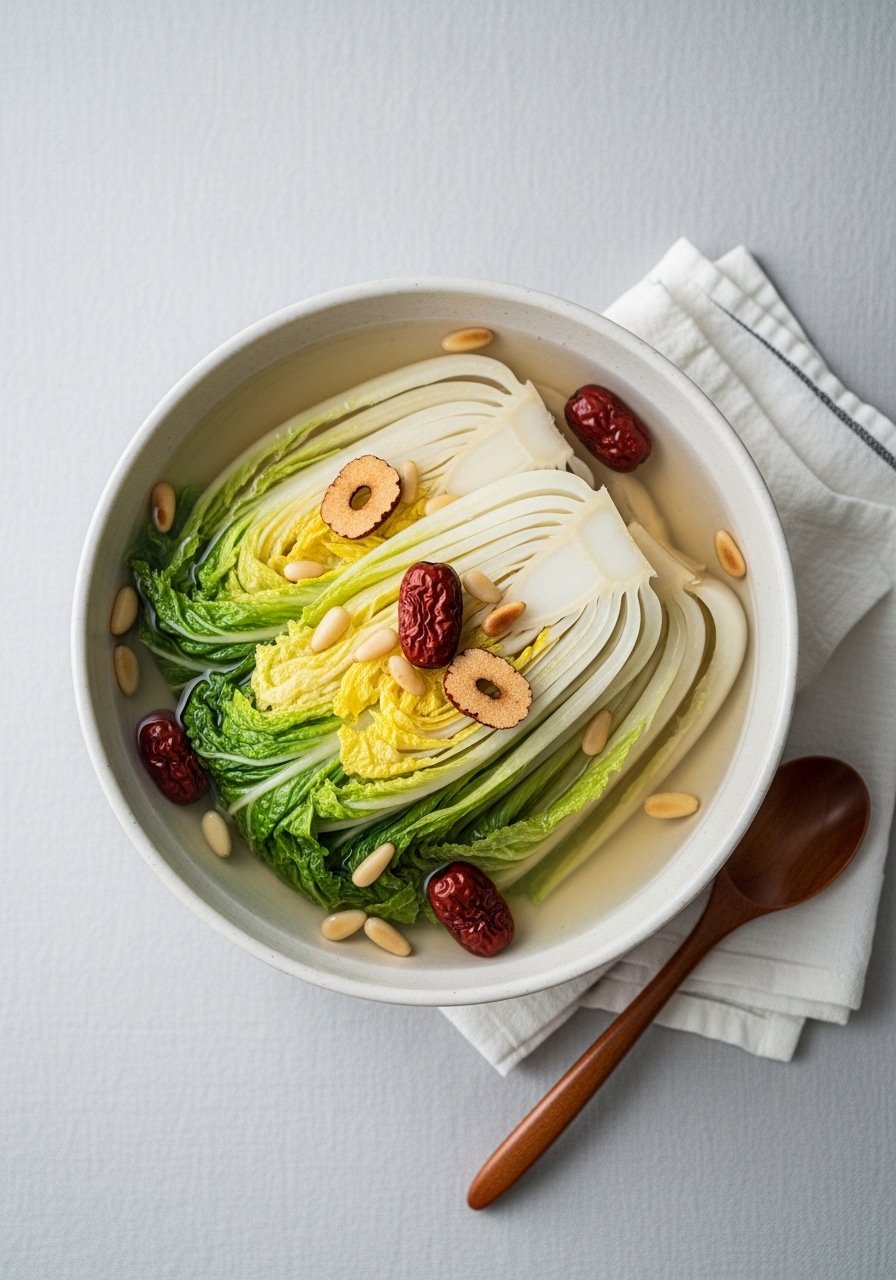
Baek kimchi skips the red pepper for a lighter, slightly sweet profile—perfect if you want kimchi without heat. This traditional kimchi recipe uses salted brine, Korean pear, and chestnuts for texture and depth. Fans of mild, fragrant condiments will adore it.
Ingredients
- 1 large Napa cabbage
- 1 cup coarse sea salt
- 8 cups cold water
- 1 Korean pear, grated
- 6 cloves garlic, minced
- 2 inches ginger, minced
- 6 scallions, cut into 2" pieces
- 1/2 cup Korean radish, julienned
- 1/4 cup pine nuts
- 6 dried jujubes, sliced
- 1 tbsp sugar (or honey; optional)
Instructions
- Brine cabbage in 1 cup coarse sea salt and 8 cups water for 2–3 hours, turning once.
- Rinse and drain the cabbage, squeezing out water.
- Mix pear, garlic, ginger, scallions, radish, pine nuts, jujubes, and sugar.
- Stuff mixture between leaves and pack into a fermentation crock.
- Let sit at room temp 24–48 hours, then refrigerate. Taste after 48 hours for mild tang.
How to Serve It
- Serve chilled with cold noodles or as a palate-cleanser.
- Garnish with extra pine nuts and sesame oil drizzle.
- Store in airtight containers for up to 3 weeks.
3. Spicy Cucumber Kimchi (Oi Sobagi) — Fast, Crunchy, Refrigerator Kimchi
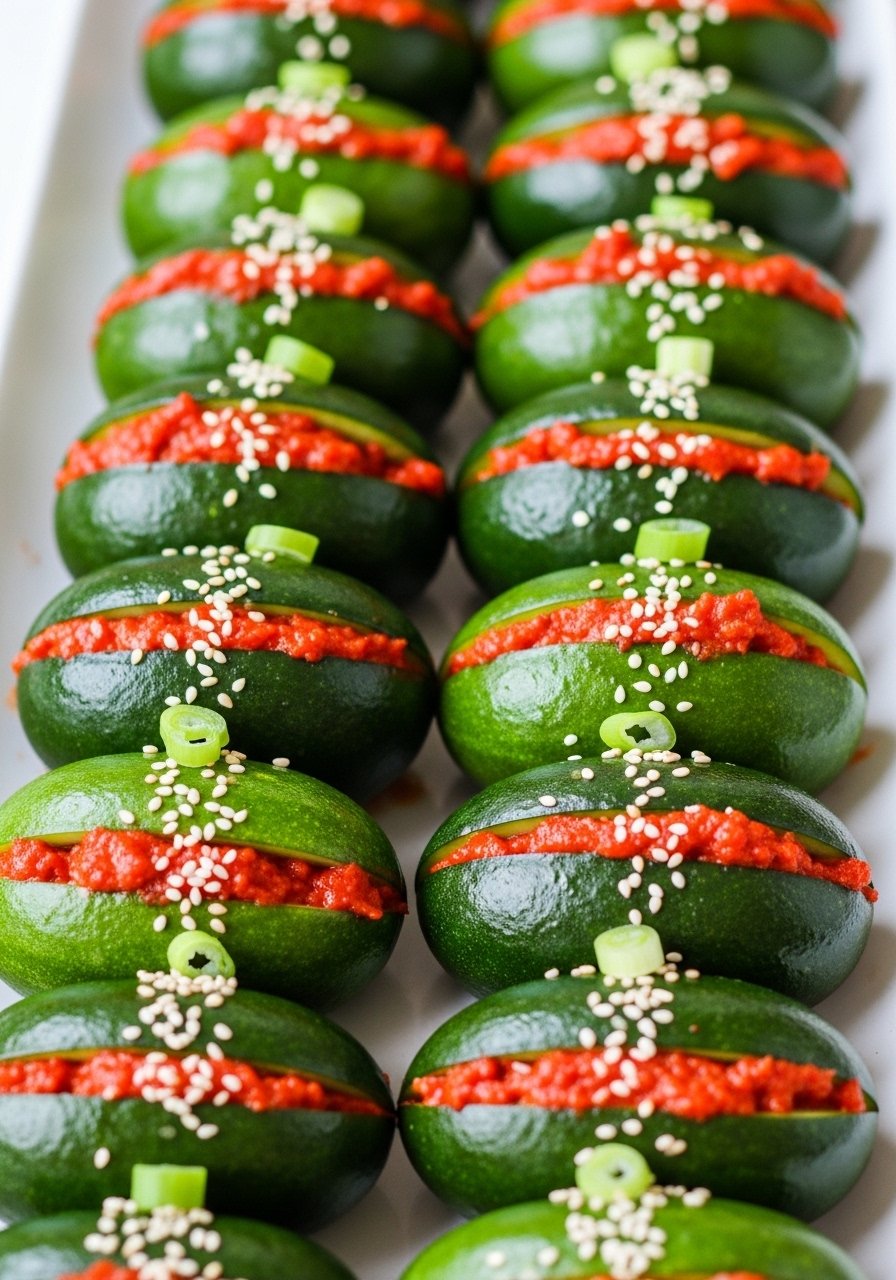
Oi sobagi is a refreshing, quick kimchi that keeps its crunch. This traditional kimchi recipe is a summer favorite—spicy, garlicky, and crisp. It ferments quickly, so it’s ideal when you want tang without a long wait.
Ingredients
- 6 Persian or Kirby cucumbers
- 2 tbsp kosher salt
- 3 tbsp gochugaru
- 2 tbsp fish sauce (or tamari for gluten-free)
- 3 cloves garlic, minced
- 1 inch ginger, minced
- 4 scallions, thinly sliced
- 1 small carrot, julienned
- 1 tbsp rice vinegar
- 1 tsp sugar
Instructions
- Slice cucumbers lengthwise but not all the way through; score inside.
- Toss with 2 tbsp salt, rest 30 minutes, then drain and pat dry.
- Mix gochugaru, fish sauce, garlic, ginger, scallions, carrot, rice vinegar, and sugar to make stuffing.
- Fill cucumbers and press into a glass jar.
- Refrigerate and eat within 1–5 days; quick fermentation yields best crunch.
How to Serve It
- Great alongside grilled fish or cold noodles.
- Serve chilled; add a drizzle of sesame oil and toasted seeds.
- Keep in fridge in airtight containers up to 1 week.
4. Radish Cube Kimchi (Kkakdugi) — Bold Bite-Sized Chunks
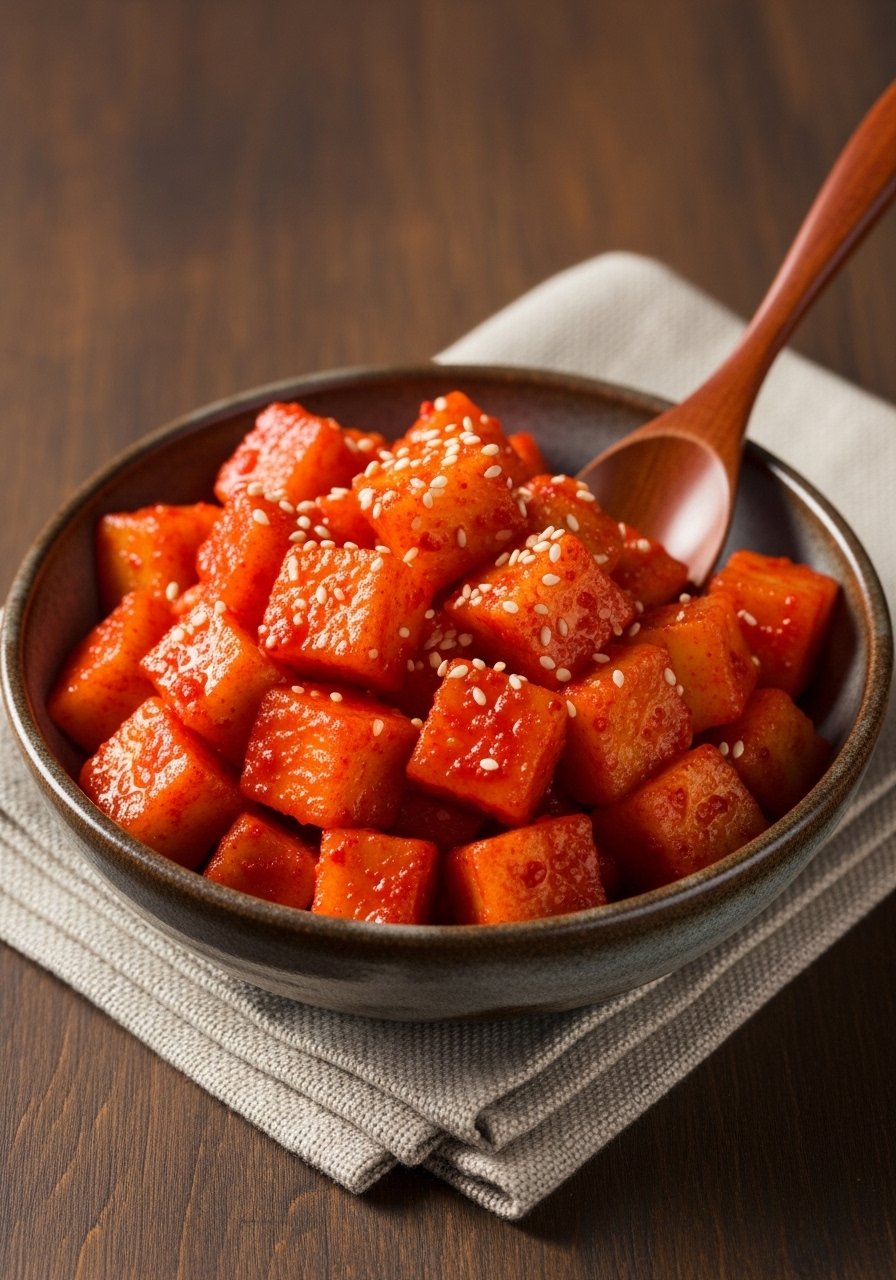
Kkakdugi uses firm Korean radish for crisp, juicy bites that soak up spice. It’s a classic accompaniment to soups like seolleongtang. This traditional kimchi recipe delivers strong, punchy flavors and satisfying crunch.
Ingredients
- 2 lb Korean radish (mu), peeled and cubed
- 2 tbsp coarse salt
- 3 tbsp gochugaru
- 3 tbsp fish sauce
- 4 cloves garlic, minced
- 1 inch ginger, grated
- 2 scallions, chopped
- 1 tbsp sugar
- 2 tbsp water
Instructions
- Toss radish cubes with 2 tbsp salt, rest 30–45 minutes, then drain.
- Stir gochugaru, fish sauce, garlic, ginger, sugar, and water into a paste.
- Fold paste into radish, add scallions.
- Pack into jar, press to eliminate air. Ferment at room temp 2–5 days; refrigerate when you like the tang.
How to Serve It
- Serve with hearty stews and rice.
- Use a wooden spoon to avoid scratching jars.
- Store in fridge in mason jars for up to 2 months.
5. Jeolla-Style Whole Cabbage Kimchi (Traditional Kimchi Recipe — Gat Kimchi Influence)
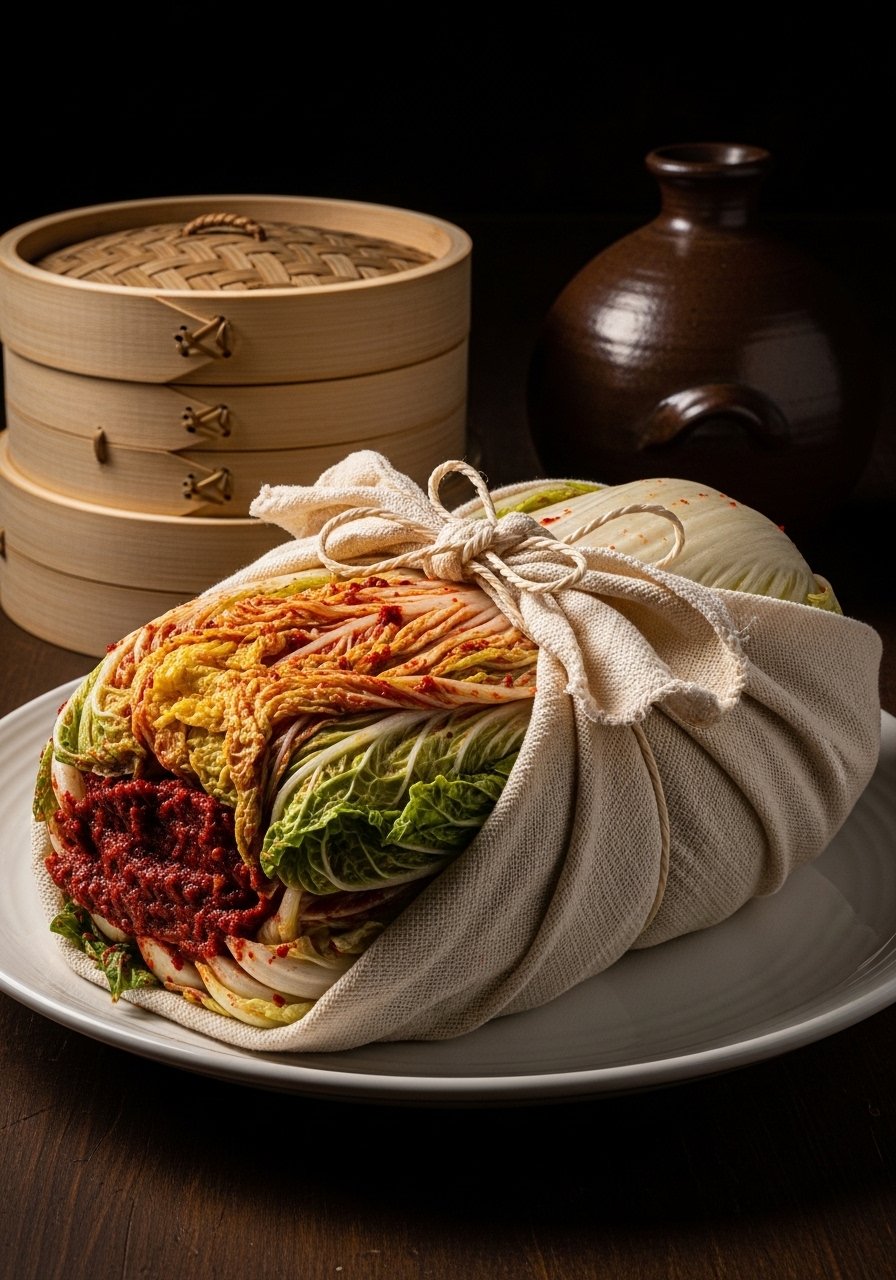
This regional whole-head style keeps layers intact and packs a complex paste—fishy, garlicky, and deeply fermented. It’s a showstopper for gatherings and makes a great gift jar. This traditional kimchi recipe honors Jeolla techniques and long fermentation.
Ingredients
- 2 medium napa cabbages
- 1 1/2 cups coarse sea salt
- 12 cups water
- 1 1/2 cups gochugaru
- 3/4 cup salted seafood (saeujeot) or fish sauce
- 8 cloves garlic, minced
- 3 inches ginger, minced
- 1 cup Korean radish, julienned
- 6 scallions, long pieces
- 1/4 cup glutinous rice paste (cooked slurry)
- 2 tbsp sugar
- 2 tbsp sesame oil (optional)
Instructions
- Brine cabbage heads in saltwater for 3 hours, turning occasionally.
- Make glutinous rice paste by cooking 2 tbsp glutinous rice flour with 1/2 cup water until thick; cool.
- Mix gochugaru, saeujeot, garlic, ginger, radish, scallions, rice paste, and sugar.
- Spread paste between all layers, leaving 1–2" headspace.
- Wrap and press in a ceramic fermentation crock. Ferment 3–7 days at room temp, then chill.
How to Serve It
- Slice wedges to serve with grilled pork belly.
- Use a sharp chef’s knife for clean cuts.
- Keep chilled in a large airtight container.
6. Green Onion (Pa) Kimchi — Scallion-Powered Flavor
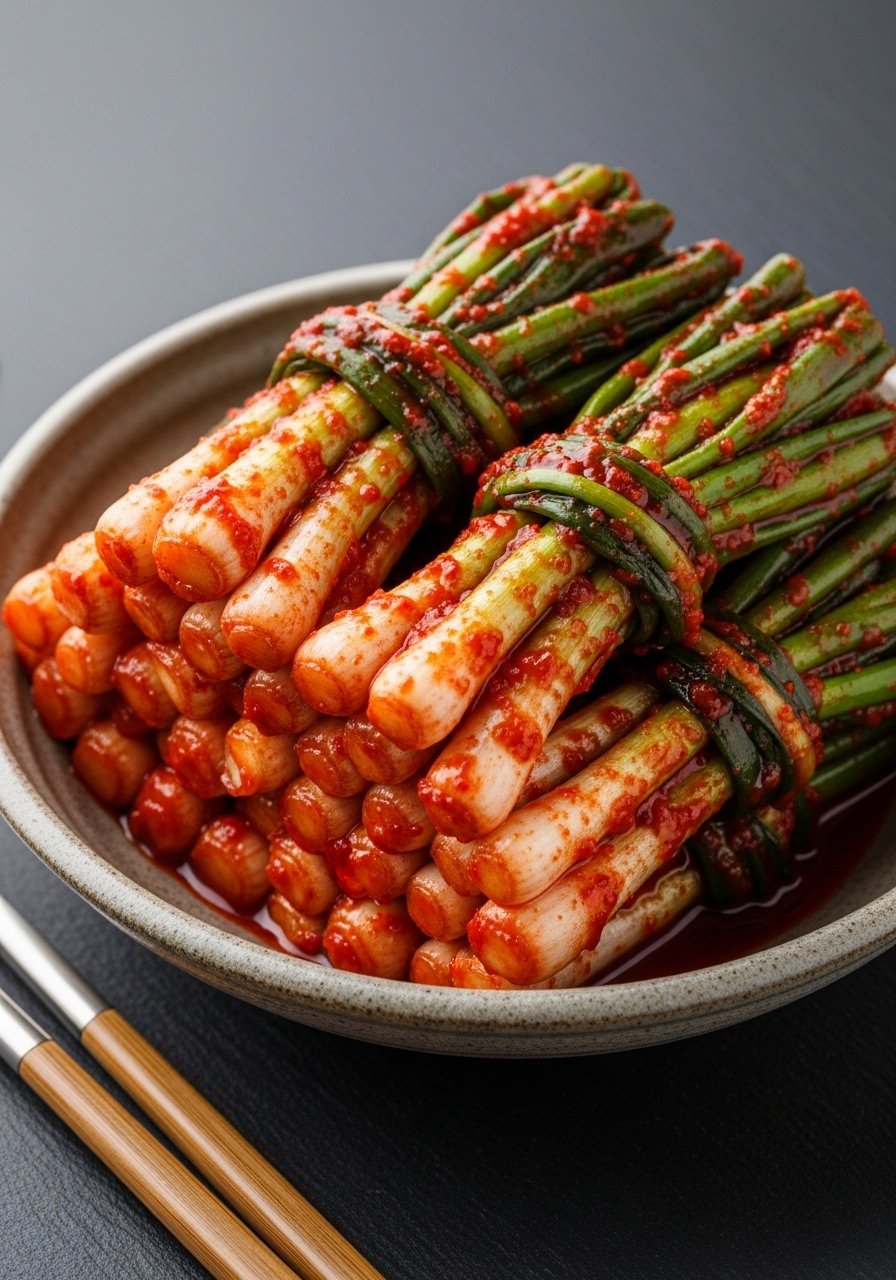
Pa kimchi highlights scallions with a spicy, fragrant paste. It’s quick to make and excellent alongside BBQ. The long, tender scallions soak in flavor and keep a nice snap.
Ingredients
- 2 bunches scallions (green onions)
- 3 tbsp gochugaru
- 2 tbsp fish sauce
- 2 tbsp soy sauce
- 3 cloves garlic, minced
- 1 inch ginger, minced
- 1 tbsp sugar
- 2 tbsp sesame oil
- 1 tbsp toasted sesame seeds
Instructions
- Wash scallions and trim roots; keep bundled.
- Mix gochugaru, fish sauce, soy, garlic, ginger, sugar, and sesame oil.
- Coat scallions evenly; tie bundles if desired.
- Place in jar and ferment 1–3 days at room temp, then refrigerate.
How to Serve It
- Chop and serve with rice or use as a banchan.
- Finish with sesame seeds.
- Store in glass jars up to 2 weeks.
7. Young Mustard Leaf Kimchi (Chonggak Kimchi Variation)
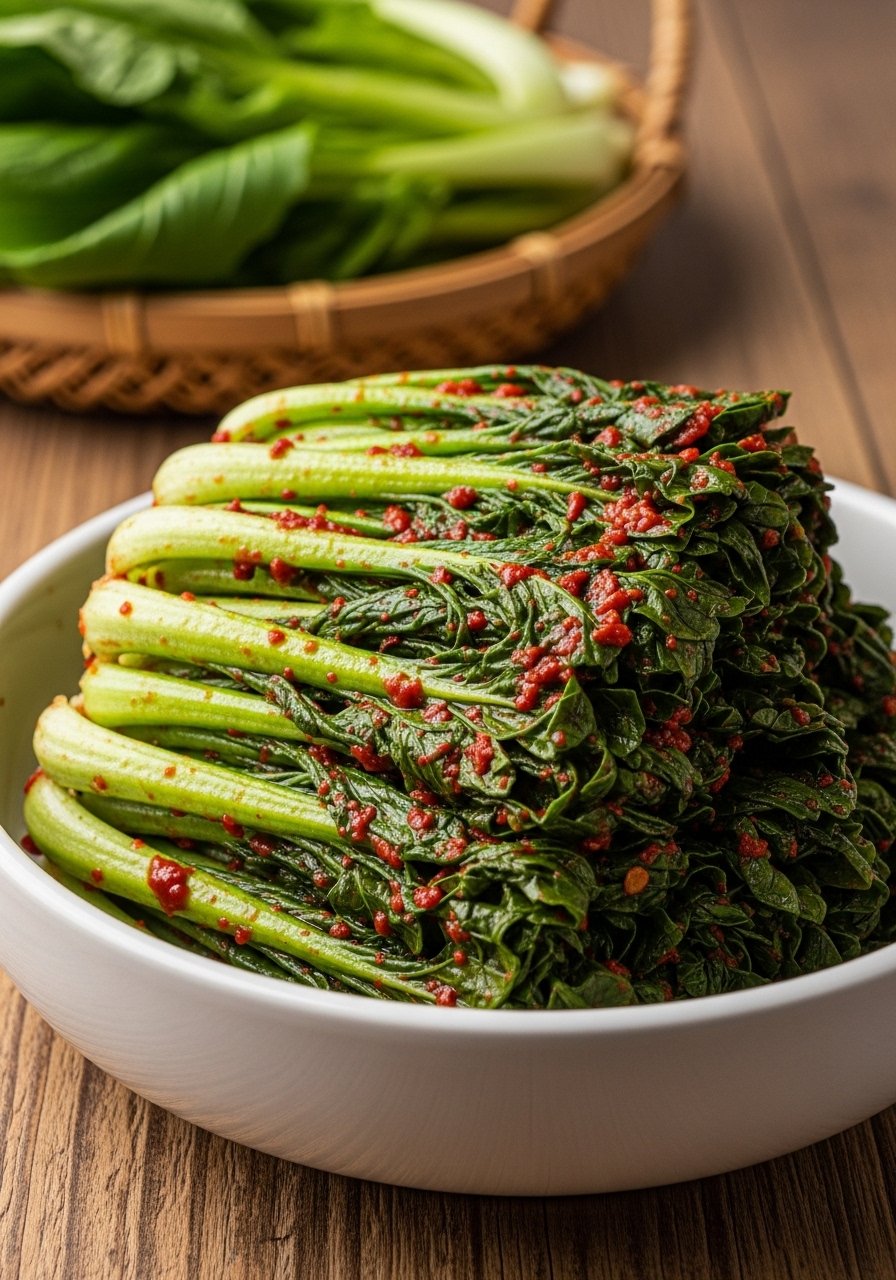
Young mustard leaves make a peppery, crunchy kimchi that’s slightly bitter and pairs well with fatty meats. The small leaves ferment faster and have great texture.
Ingredients
- 1 lb young mustard leaves
- 2 tbsp coarse salt
- 1/3 cup gochugaru
- 3 tbsp fish sauce
- 4 cloves garlic, minced
- 1 inch ginger, minced
- 2 scallions, chopped
- 1 tbsp sugar
- 2 tbsp water
Instructions
- Salt leaves lightly and rest 30 minutes.
- Rinse and drain.
- Mix remaining ingredients into a paste.
- Toss leaves with paste, pack into jar, and ferment 1–3 days.
How to Serve It
- Pair with pork or grilled fish.
- Store in airtight containers for up to 2 weeks.
8. Chonggak (Ponytail) Radish Kimchi — Tender & Tangy
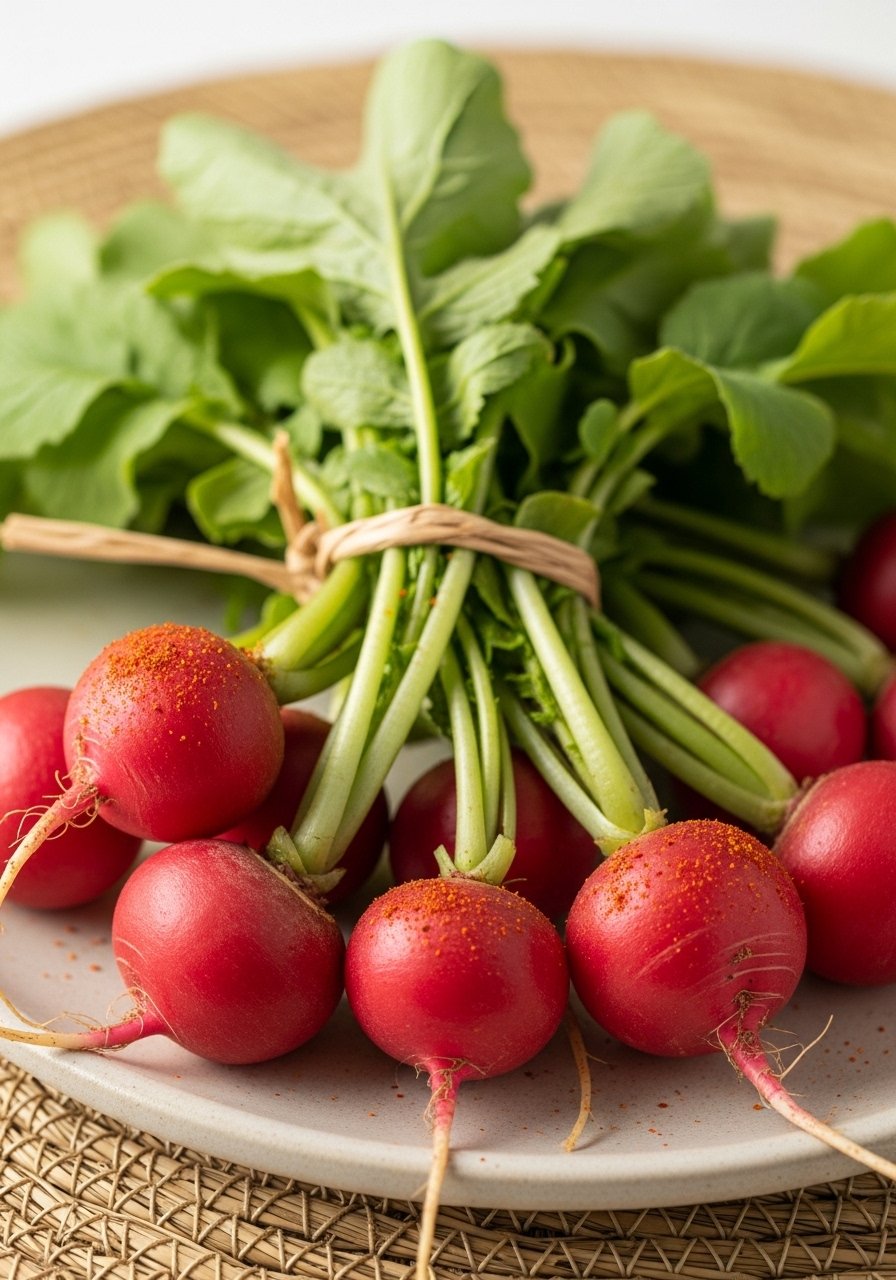
Chonggak kimchi uses whole young radishes (with greens). It’s crunchy at first and mellows quickly; the greens add complexity. This is a beloved traditional kimchi recipe in many homes.
Ingredients
- 2 lb chonggak (young radishes)
- 1/4 cup coarse salt
- 1/2 cup gochugaru
- 1/4 cup fish sauce
- 4 cloves garlic, minced
- 1 inch ginger, minced
- 4 scallions, chopped
- 1 tbsp sugar
Instructions
- Clean radishes and toss with salt; rest 1 hour.
- Rinse and drain.
- Mix gochugaru, fish sauce, garlic, ginger, scallions, and sugar.
- Coat radishes and pack into jar; ferment 2–5 days.
How to Serve It
- A great kimchi for soups and rice.
- Store in mason jars in fridge up to 6 weeks.
9. Dongchimi — Water Kimchi (Traditional Kimchi Recipe — Mild, Cooling)
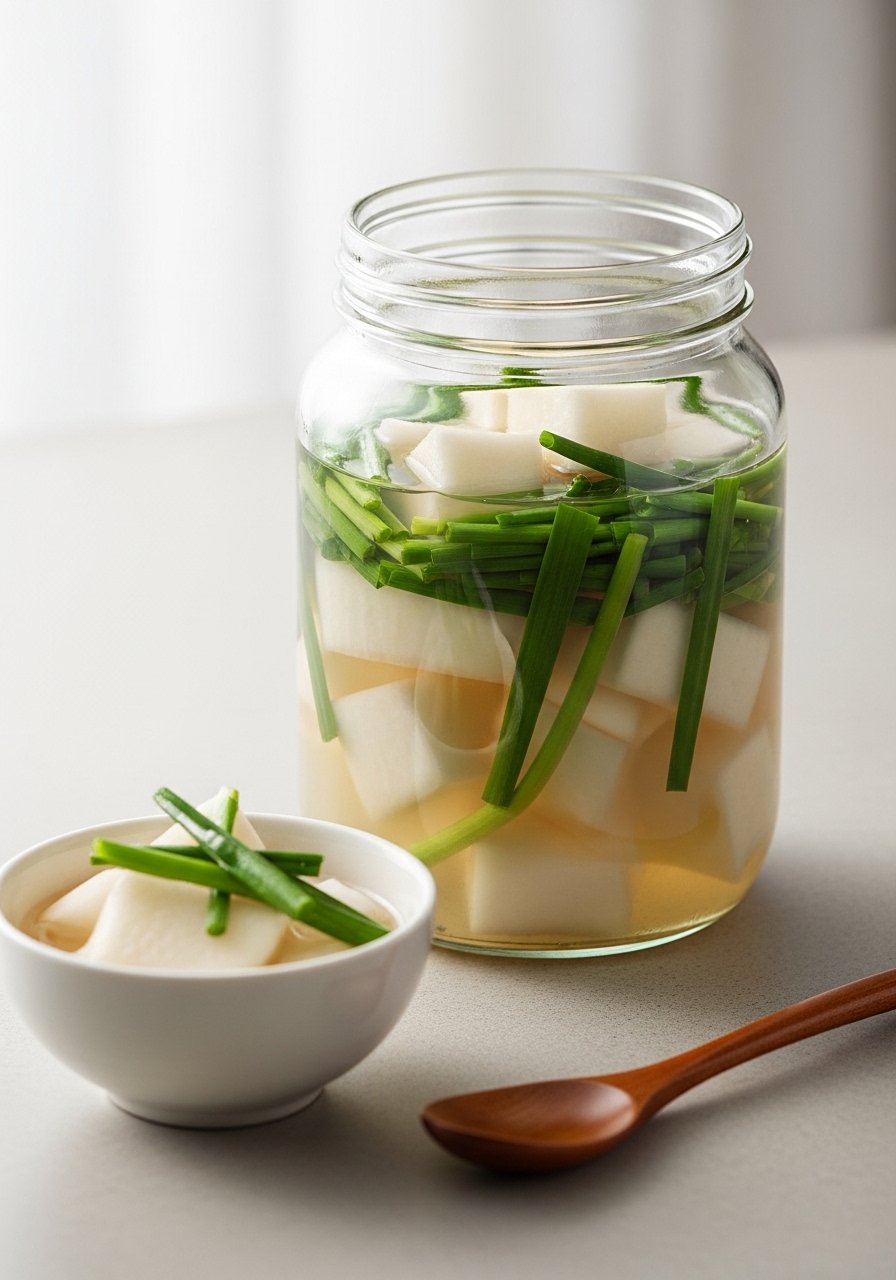
Dongchimi is a cold, watery kimchi with a clean, slightly sweet flavor—perfect with noodles or as a refreshing palate cleanser. The brine becomes lightly effervescent during fermentation.
Ingredients
- 2 lb Korean radish, cut into thick sticks
- 6 scallions, cut in thirds
- 4 cloves garlic, crushed
- 1 small piece ginger, sliced
- 1/4 cup coarse salt
- 8 cups cold water
- 1 pear, sliced
- 1 chili pepper (optional)
Instructions
- Dissolve salt in water to make brine and pour over radish and scallions in a jar.
- Add garlic, ginger, pear, and optional chili.
- Press down, leaving headspace, and ferment at cool room temp 2–4 days.
- Chill before serving; brine should be cloudy and mildly tangy.
How to Serve It
- Serve cold with noodles, dumplings, or seafood.
- Use a large glass jar to see brine clarity.
- Keep refrigerated; best within 2 weeks.
10. Oyster Kimchi — Briny Luxury
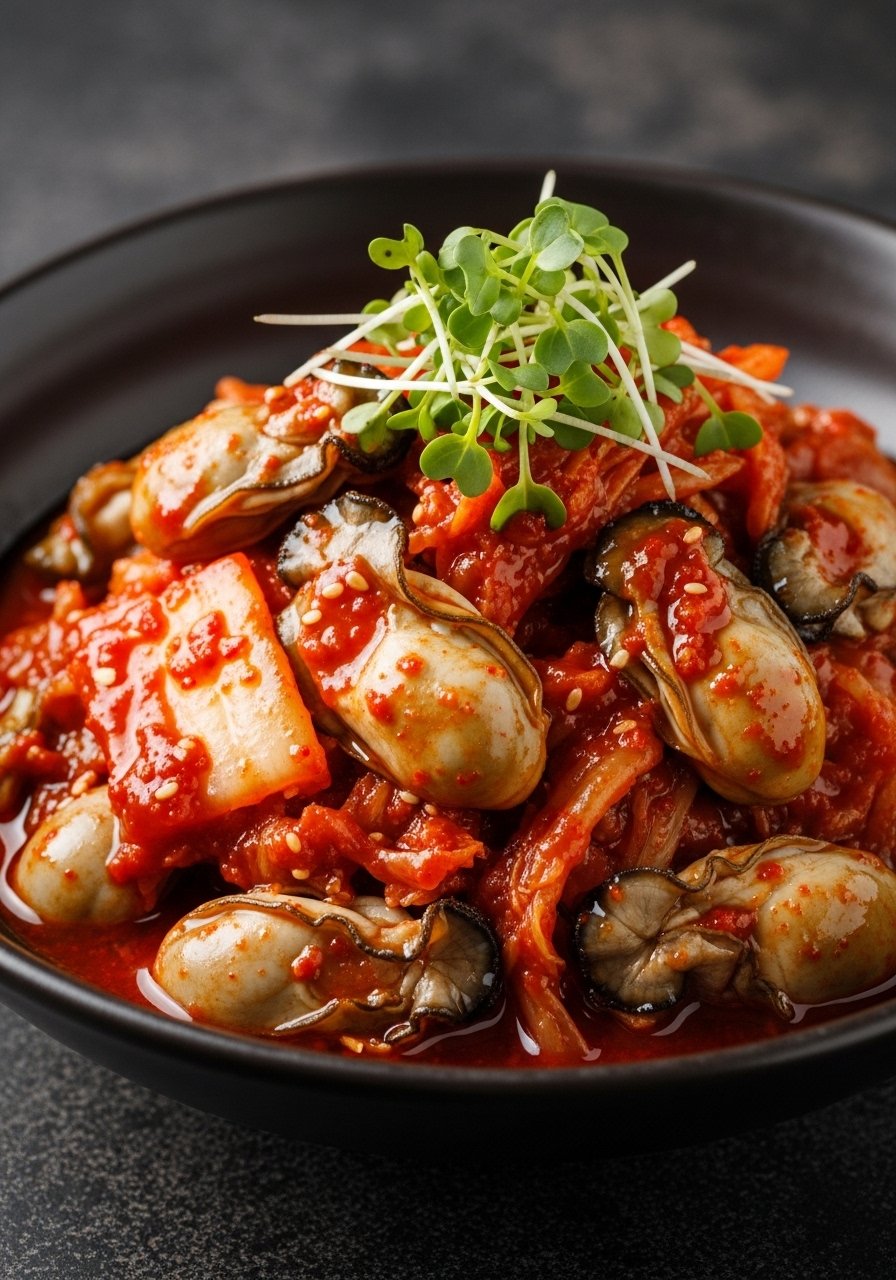
Fresh oysters add a briny richness to kimchi that’s luxurious and deep. This version is for seafood lovers and works well when you want an umami-forward condiment.
Ingredients
- 1 head Napa cabbage
- 1 cup coarse salt
- 8 cups water
- 1/2 cup gochugaru
- 1/2 cup raw oysters, chopped
- 1/4 cup fish sauce
- 6 cloves garlic, minced
- 1 inch ginger, minced
- 1 pear, grated
- 6 scallions, chopped
Instructions
- Brine cabbage as in classic recipe 2–3 hours, rinse and drain.
- Mix gochugaru, fish sauce, garlic, ginger, pear, and oysters.
- Spread between leaves, pack into jar, and ferment 2–5 days.
- Refrigerate once flavor is to your liking.
How to Serve It
- Serve with rice, steamed clams, or grilled fish.
- Keep oysters fresh by chilling quickly in airtight glass containers.
11. Kelp & Anchovy (Miyeok) Kimchi — Deep Umami
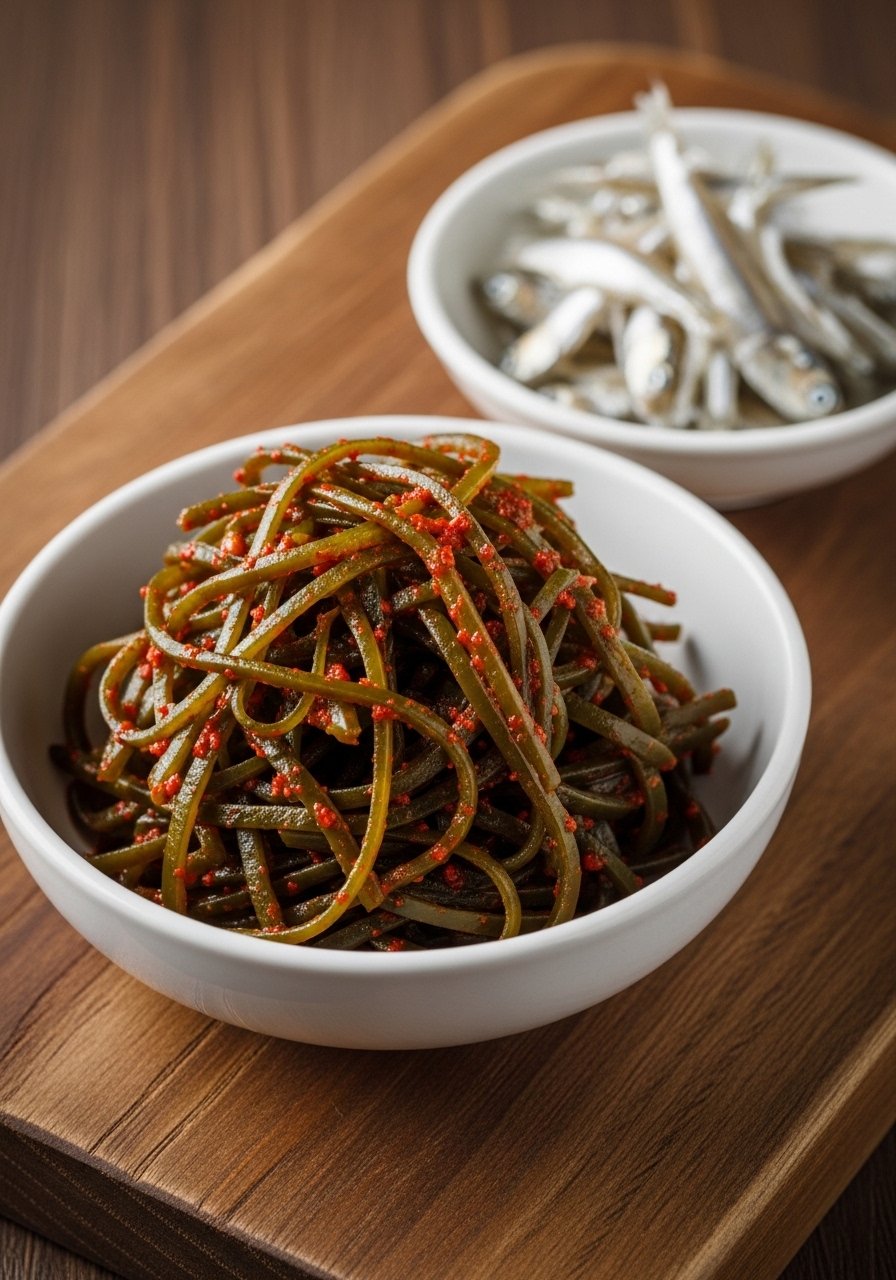
Using kelp and anchovy creates a deep oceanic base that infuses vegetables with savory richness. This traditional kimchi recipe is great with seafood dishes or rice porridge.
Ingredients
- 1 bunch napa or leaf cabbage
- 1/2 cup dried kelp, rehydrated and sliced
- 1/3 cup small salted anchovies (myeolchi), mashed
- 1/2 cup gochugaru
- 1/4 cup soy sauce
- 4 cloves garlic, minced
- 1 inch ginger, grated
- 2 scallions, cut into 2" pieces
- 1 tbsp sugar
Instructions
- Prepare cabbage with salt brine 2 hours, rinse and drain.
- Rehydrate kelp per package and slice thinly.
- Mash anchovies and mix with gochugaru, soy, garlic, ginger, and sugar.
- Combine kelp and scallions with paste; stuff cabbage leaves and pack into jar. Ferment 2–6 days.
How to Serve It
- Pairs with seafood soups and grilled fish.
- Store in airtight jars.
12. Kkori Gomtang Kimchi (Tail Soup Side Kimchi) — Ferments for Hearty Soups
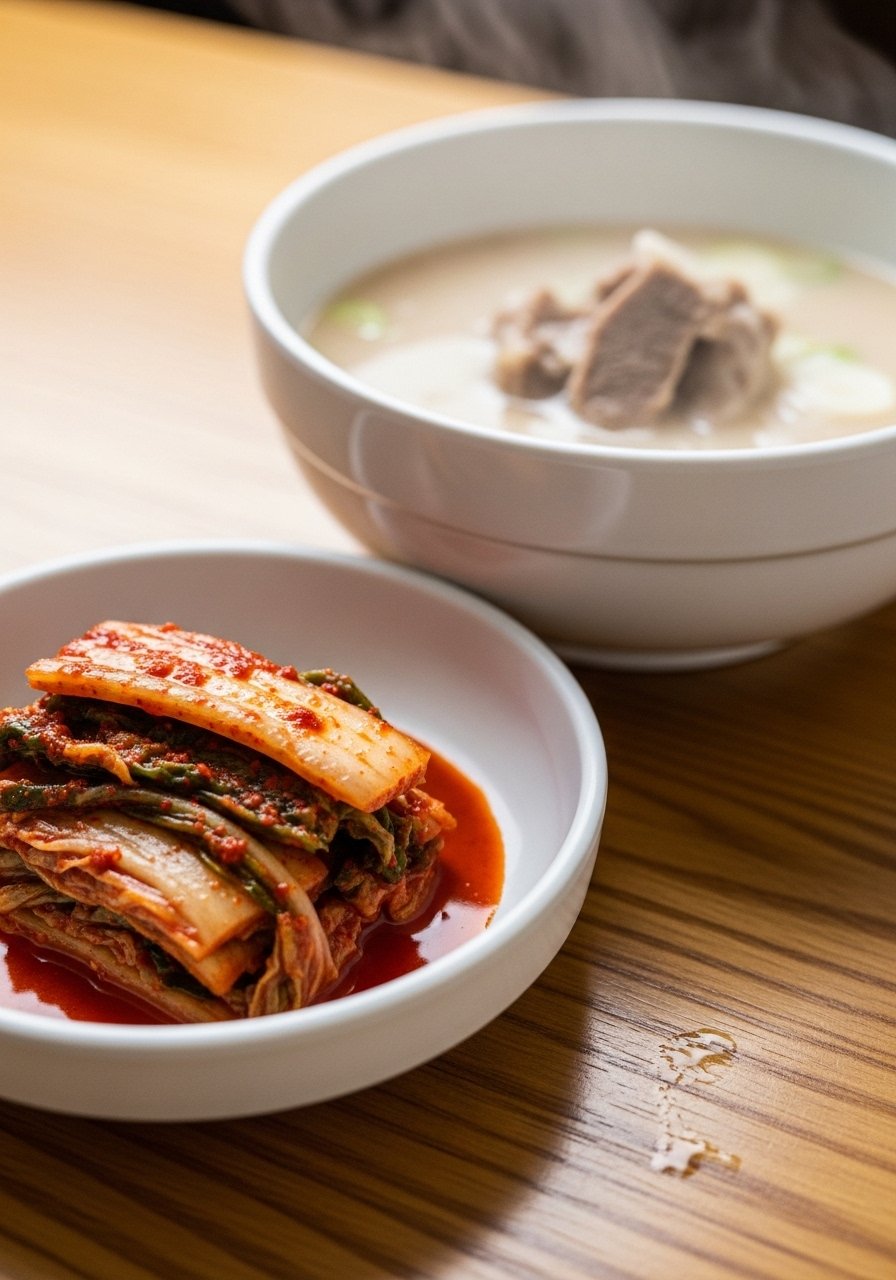
This kimchi is chopped coarsely and meant for pairing with beef bone soups. It’s savory, slightly aged, and stands up to rich broths.
Ingredients
- 1 small napa cabbage
- 1/2 cup coarse salt
- 1/2 cup gochugaru
- 1/4 cup fish sauce
- 5 cloves garlic
- 1 inch ginger
- 1 small onion, sliced
- 1 tbsp sugar
- 2 scallions, chopped
Instructions
- Brine cabbage 2 hours, rinse.
- Mix gochugaru, fish sauce, garlic, ginger, onion, sugar.
- Chop cabbage into large strips and toss with paste.
- Pack and ferment 3–7 days.
How to Serve It
- Add to bone broth or hotpot right before serving.
- Store in mason jars.
13. Kimchi with Miso (Doenjang-Kimchi) — Earthy, Umami-Rich
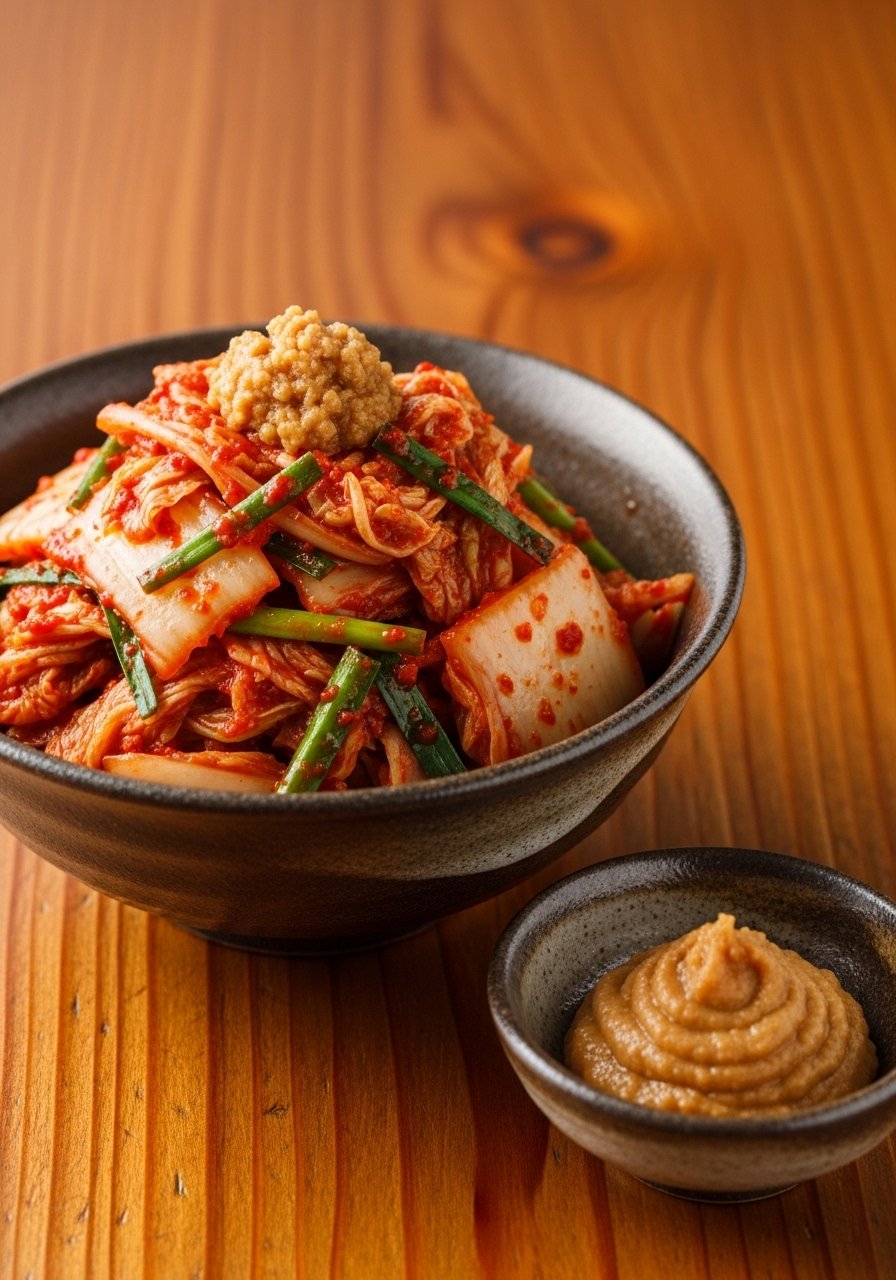
Adding Korean doenjang (soybean paste) brings deep, savory notes to kimchi. This version is excellent if you enjoy earthy umami flavors rather than bright seafood notes.
Ingredients
- 1 head napa cabbage
- 1 cup coarse salt
- 8 cups water
- 1/2 cup gochugaru
- 3 tbsp doenjang (Korean soybean paste)
- 1/4 cup rice syrup or sugar
- 4 cloves garlic, minced
- 1 inch ginger, minced
- 6 scallions, cut
- 1 small Korean radish, julienned
Instructions
- Brine cabbage 2–3 hours and drain.
- Blend gochugaru with doenjang, garlic, ginger, and rice syrup to make a paste.
- Mix in radish and scallions, stuff cabbage leaves.
- Ferment 3–7 days based on taste.
How to Serve It
- Great with rice, grilled vegetables, or as a marinade base.
- Store in airtight containers up to 2 months.
14. Quick Refrigerator Kimchi — No Ferment, Big Flavor
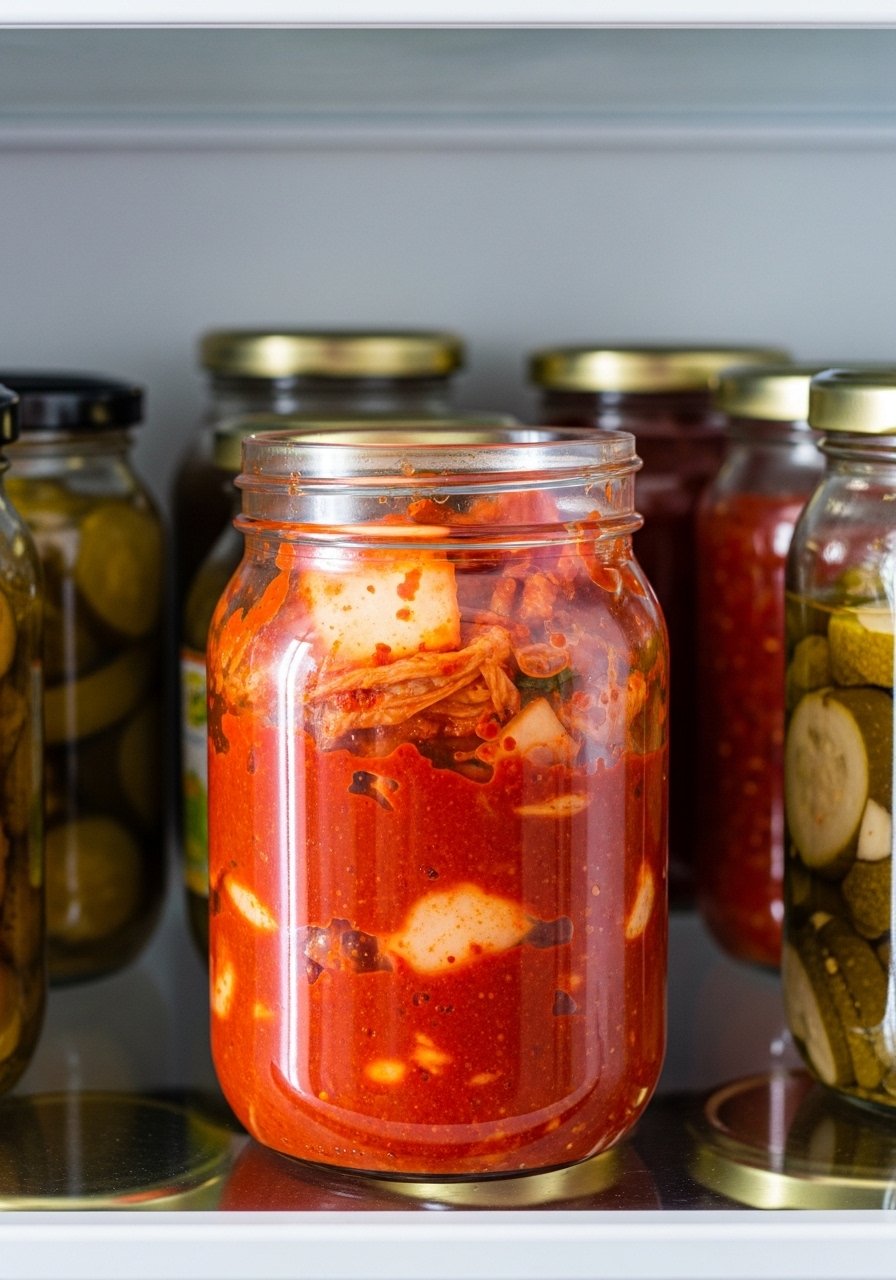
Short on time? This quick kimchi skips room-temperature fermentation and goes straight to the fridge. You get great texture and immediate flavor without waiting.
Ingredients
- 1 head Napa cabbage, chopped
- 3 tbsp kosher salt
- 1/2 cup gochugaru
- 1/4 cup fish sauce
- 6 cloves garlic, minced
- 1 inch ginger, grated
- 2 scallions, sliced
- 1 tbsp sugar
Instructions
- Salt chopped cabbage for 30–45 minutes, then rinse and drain.
- Combine remaining ingredients; toss evenly.
- Pack into jars and refrigerate; flavors develop over 24–72 hours.
How to Serve It
- Serve chilled as a quick side.
- Store in airtight jars up to 3 weeks.
15. Apple & Pear Sweet Kimchi — Fruity and Balanced
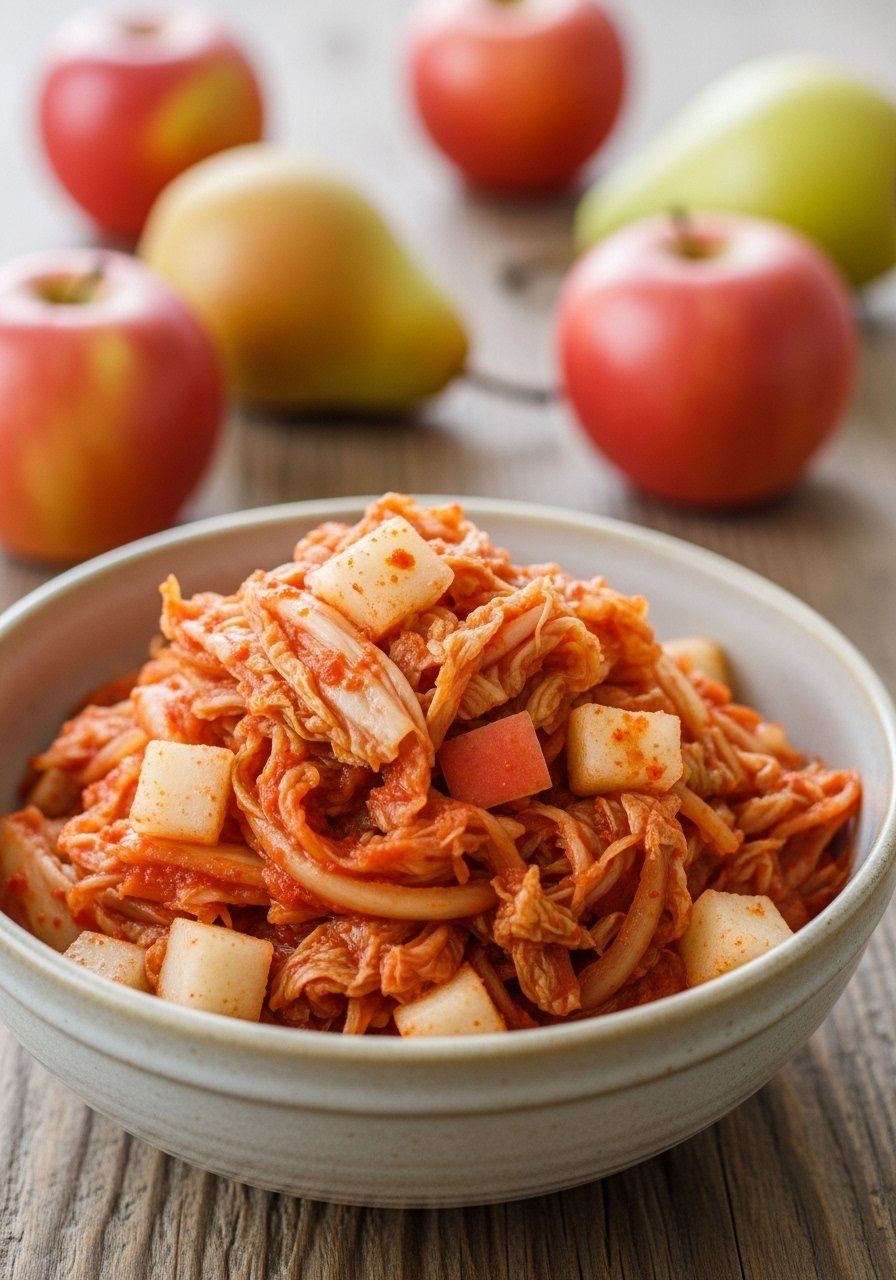
Adding fruit helps the kimchi ferment with a gentle sweet note and complex aroma. This version appeals to those who like slightly sweeter, rounder kimchi flavors.
Ingredients
- 1 Napa cabbage
- 1 cup kosher salt
- 8 cups water
- 1/2 cup gochugaru
- 1/4 cup fish sauce
- 1 apple, grated
- 1 pear, grated
- 4 cloves garlic, minced
- 1 inch ginger, grated
- 6 scallions, chopped
Instructions
- Brine cabbage 2–3 hours, rinse and drain.
- Mix gochugaru, fish sauce, apple, pear, garlic, and ginger.
- Spread between leaves, pack into jar, and ferment 2–6 days.
How to Serve It
- Pairs well with pork dishes and grilled chicken.
- Store in glass meal prep containers.
16. Low-Salt Kimchi — Lighter Fermentation (Keto-Friendly Option)
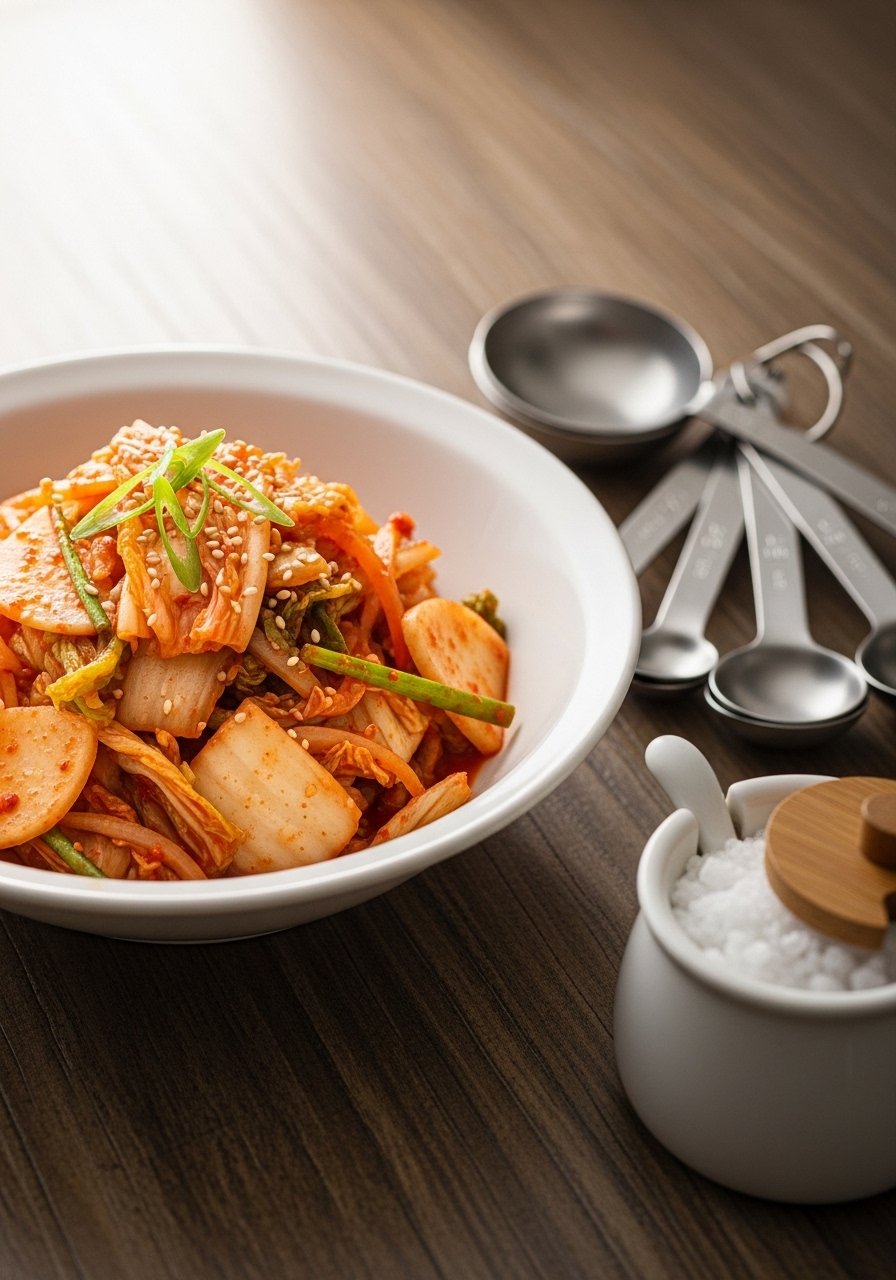
If you’re watching sodium or following keto, this recipe uses reduced salt and a longer fermentation to develop flavor. It keeps carbs low by skipping added sugars.
Ingredients
- 1 Napa cabbage
- 1/2 cup coarse salt
- 8 cups water
- 1/2 cup gochugaru
- 1/4 cup fish sauce (or reduced-sodium tamari)
- 4 cloves garlic
- 1 inch ginger
- 6 scallions
- 1 tbsp erythritol or omit
Instructions
- Brine cabbage 2–3 hours in reduced salt solution.
- Rinse and drain.
- Mix remaining ingredients and coat cabbage.
- Ferment longer at room temp 5–10 days for deeper flavor with less salt.
How to Serve It
- Great with low-carb dishes and stews.
- Store in airtight glass jars.
17. Perilla Leaf Kimchi — Herbaceous & Aromatic
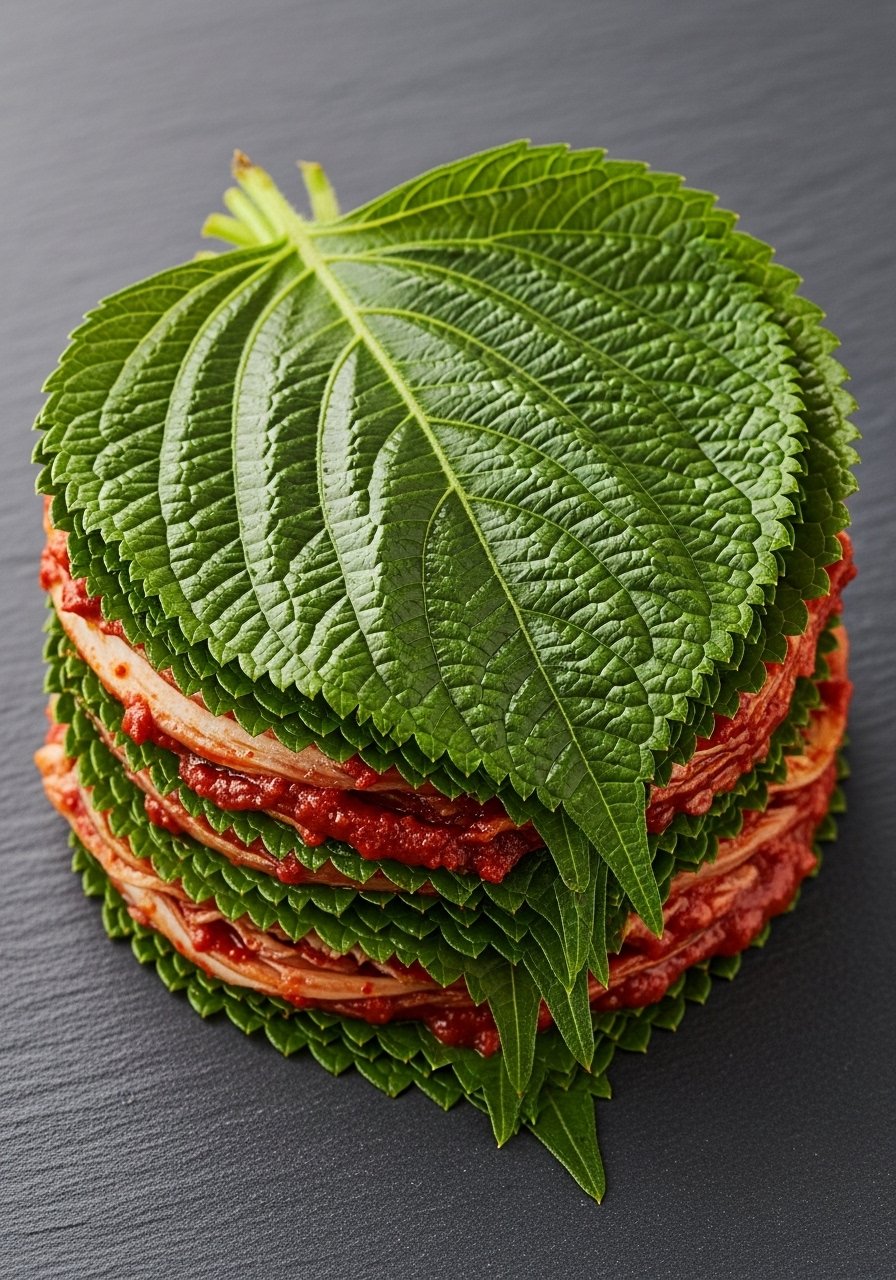
Perilla leaves add a distinctive herbal note that’s fragrant and slightly minty. They’re thin, so ferment quickly and make ideal wraps or garnishes.
Ingredients
- 30 perilla leaves
- 3 tbsp gochugaru
- 2 tbsp fish sauce
- 2 cloves garlic, minced
- 1 tsp sugar
- 1 tbsp toasted sesame seeds
- 1 tbsp sesame oil
Instructions
- Mix gochugaru, fish sauce, garlic, sugar, sesame oil, and seeds.
- Spread thinly between each perilla leaf.
- Stack and press into a flat container; ferment 1–2 days then chill.
How to Serve It
- Use as wraps for rice or grilled meats.
- Store in airtight containers up to 2 weeks.
18. Kimchi with Gochujang — Deep, Sticky Heat
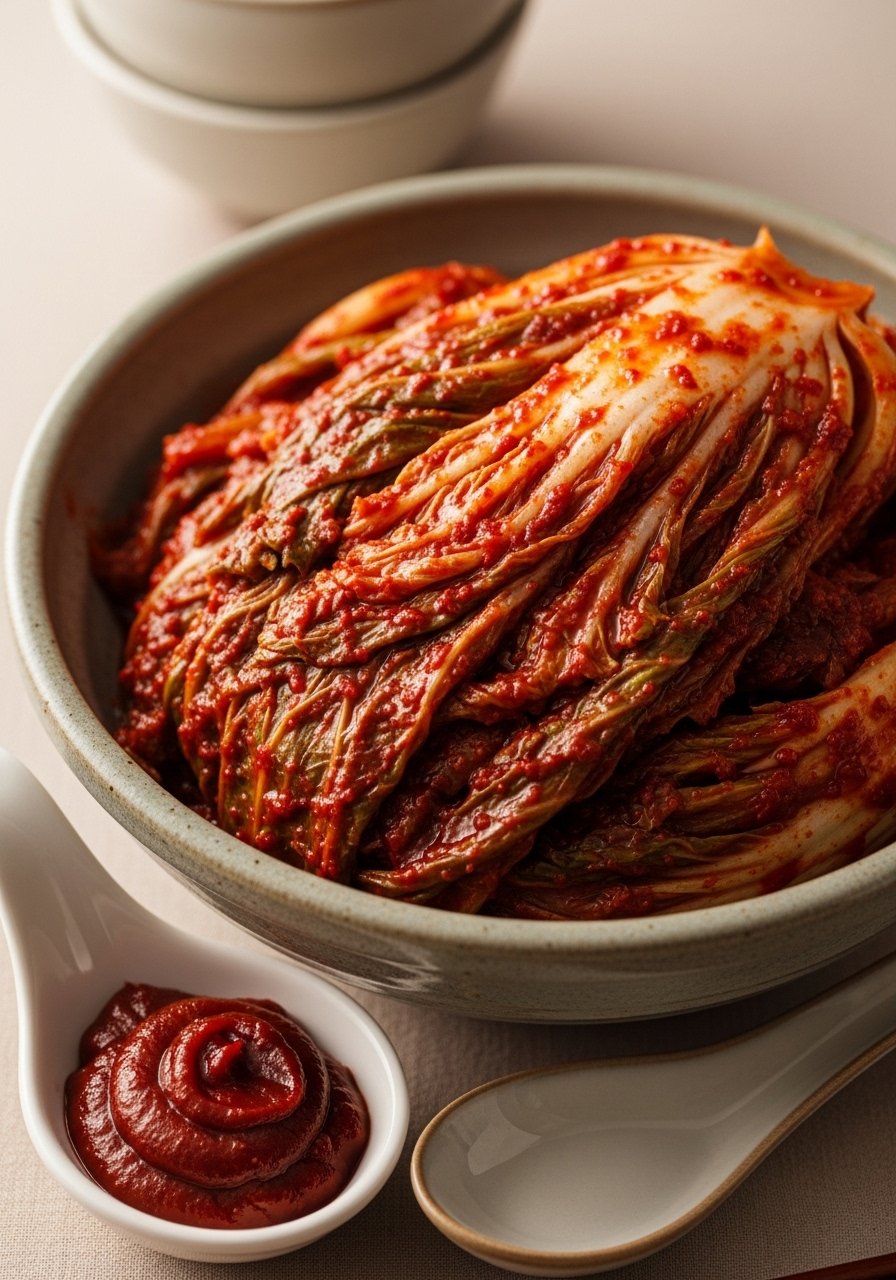
Gochujang adds fermented chili paste for a richer, more rounded heat. This version is slightly sweeter and thicker—great if you love robust, sauce-like kimchi.
Ingredients
- 1 head Napa cabbage
- 1 cup coarse salt
- 8 cups water
- 1/3 cup gochugaru
- 2 tbsp gochujang
- 1/4 cup fish sauce
- 4 cloves garlic
- 1 inch ginger
- 2 scallions, sliced
- 1 tbsp sugar
Instructions
- Brine cabbage 2–3 hours, rinse and drain.
- Mix gochugaru, gochujang, fish sauce, garlic, ginger, scallions, and sugar.
- Spread between leaves and ferment 2–5 days.
How to Serve It
- Excellent as a marinade base or on tacos.
- Store in airtight jars.
19. Kimchi with Shrimp Paste (Saeujeot) — Classic Briny Kick
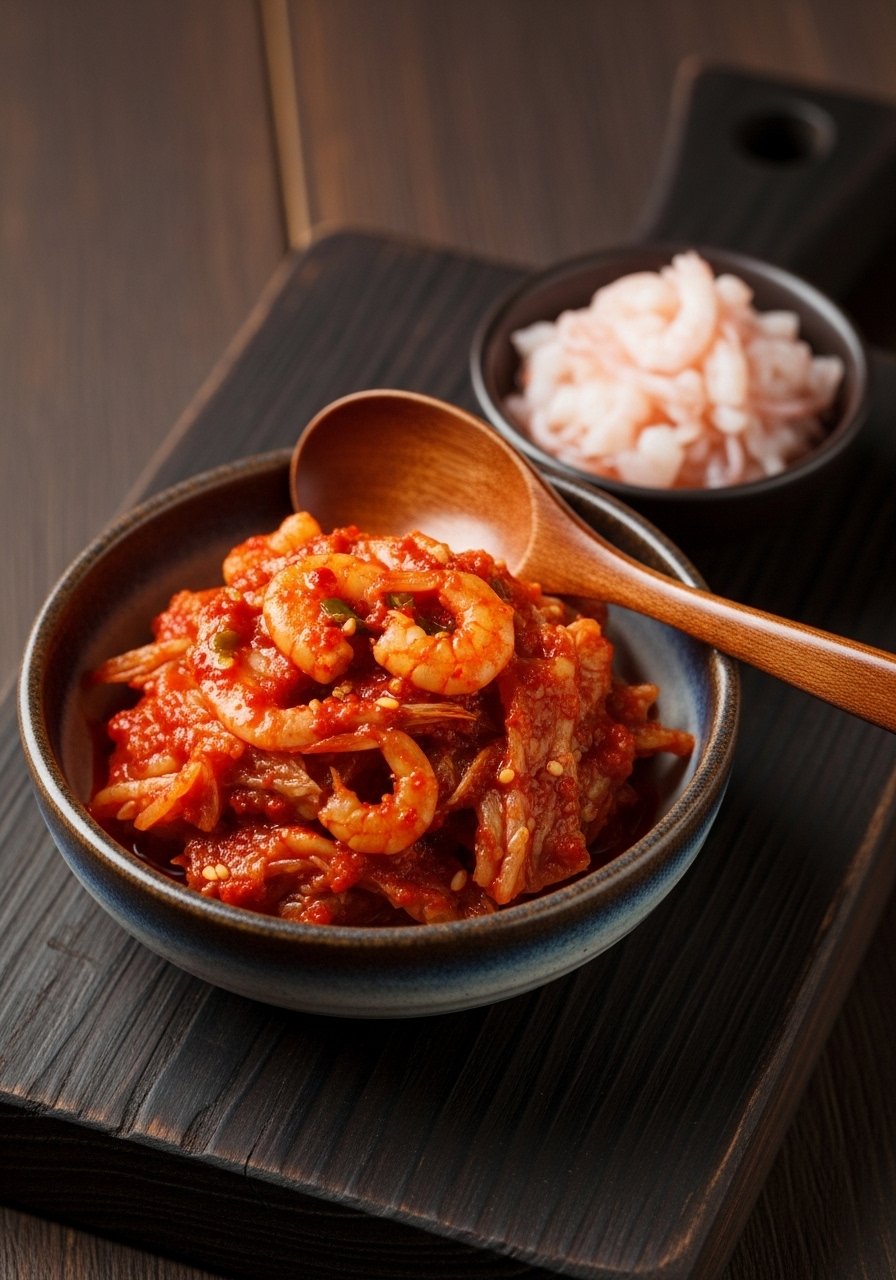
Saeujeot—a salted tiny shrimp paste—gives a powerful umami punch. It’s common in many traditional kimchi recipes and helps jumpstart fermentation.
Ingredients
- 1 Napa cabbage
- 1 cup kosher salt
- 8 cups water
- 1/3 cup gochugaru
- 1/4 cup saeujeot (salted shrimp)
- 4 cloves garlic
- 1 inch ginger
- 1 pear, grated
- 6 scallions, cut
Instructions
- Brine cabbage 2–3 hours, rinse.
- Mix gochugaru, saeujeot, garlic, ginger, pear, and scallions.
- Coat leaves and ferment 2–6 days.
How to Serve It
- Pairs with hearty stews and noodles.
- Keep in glass jars.
20. Kimchi Pancakes (Kimchi Jeon) — Use Leftover Kimchi

One of the best uses for mature kimchi is kimchi jeon—crispy, savory pancakes. This recipe shows how to turn your fermented kimchi into a snack or meal.
Ingredients
- 1 cup chopped kimchi (well fermented)
- 1/2 cup kimchi juice
- 1 cup all-purpose flour
- 1/2 cup cold water
- 1 egg
- 1/4 tsp salt
- 2 scallions, chopped
- Oil for frying
Instructions
- Mix flour, water, egg, salt, kimchi juice, and kimchi to make a batter.
- Heat a cast iron skillet over medium-high and add oil.
- Pour batter to form a pancake; cook 3–4 minutes per side until golden and crispy.
- Drain on a cooling rack.
How to Serve It
- Serve with soy-vinegar dipping sauce and green onion garnish.
- Great hot from the skillet; store leftovers in airtight containers and reheat in a skillet.
21. Kimchi-Stew Base (Kimchi Jjigae) — Soup-Ready Kimchi
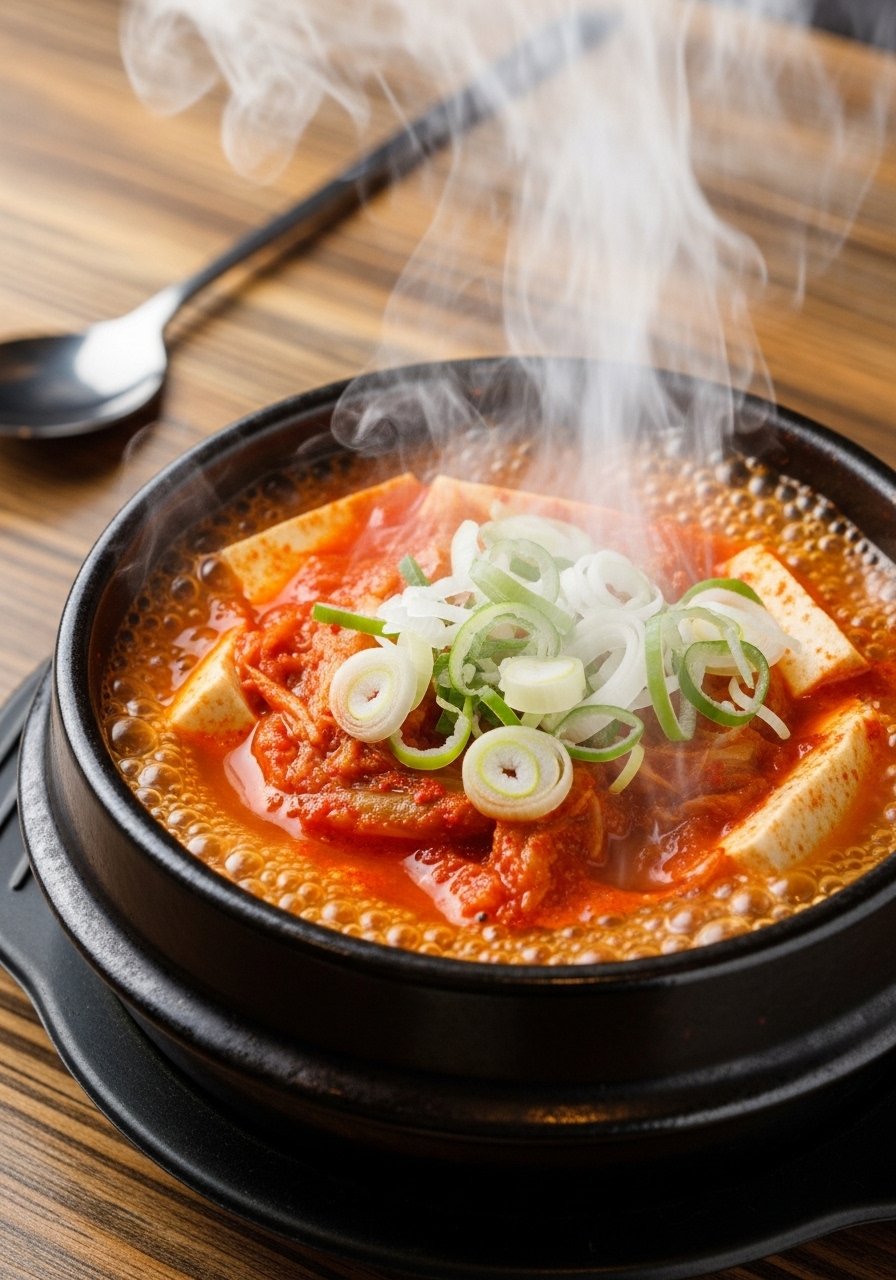
This recipe is for kimchi prepared specifically as a stew base—saltier and well-aged so it adds punch to jjigae. Make a batch and freeze portions for quick soups.
Ingredients
- 2 cups well-fermented kimchi, chopped
- 1/2 cup kimchi juice
- 6 cups beef or vegetable broth
- 200 g pork belly or tofu, cubed
- 1 onion, sliced
- 2 scallions
- 1 tbsp gochugaru
- 1 tbsp sesame oil
Instructions
- Sauté pork belly in a pot until browned, add kimchi and kimchi juice.
- Add broth and onion; simmer 20–30 minutes.
- Add tofu and simmer 5 more minutes.
- Adjust seasoning and finish with scallions.
How to Serve It
- Serve with steamed rice and side banchan.
- Freeze portions in freezer-safe containers.
22. Kimchi Fried Rice (Kimchi Bokkeumbap) — Comfort Dish

Kimchi fried rice turns leftover rice and kimchi into a cozy, quick meal. The tangy kimchi caramelizes and adds depth.
Ingredients
- 2 cups cold cooked rice
- 1 cup chopped kimchi
- 2 tbsp kimchi juice
- 1 tbsp gochugaru
- 1 small onion, diced
- 2 cloves garlic, minced
- 2 eggs
- 2 tbsp soy sauce
- 2 scallions, chopped
- 2 tbsp oil
Instructions
- Heat oil in a non-stick skillet.
- Sauté onions and garlic, add kimchi and cook 3–4 minutes.
- Stir in rice, kimchi juice, gochugaru, and soy sauce; fry 5–7 minutes.
- Serve topped with fried eggs and scallions.
How to Serve It
- Serve with toasted seaweed and kimchi on the side.
- Store leftovers in airtight containers and reheat in a skillet for best texture.
23. Kimchi Stuffed Dumplings (Kimchi Mandu)

Kimchi adds a bright, spicy note to dumpling filling. These are great steamed or pan-fried for crispy bottoms.
Ingredients
- 1 cup chopped kimchi, squeezed
- 1/2 lb ground pork or tofu
- 1/2 cup kimchi juice
- 1/2 cup chopped scallions
- 1 tbsp soy sauce
- 1 tsp sesame oil
- 1 pack dumpling wrappers
- Oil for pan-frying
Instructions
- Mix kimchi, meat, scallions, soy sauce, and sesame oil.
- Place filling in wrappers, seal with water.
- Steam or pan-fry in a non-stick skillet with oil till crisp.
- Serve warm with dipping sauce.
How to Serve It
- Serve with soy-vinegar dipping sauce and sliced scallions.
- Freeze in airtight freezer bags for make-ahead convenience.
24. Kimchi Salad (Light & Tangy) — Fresh Twist
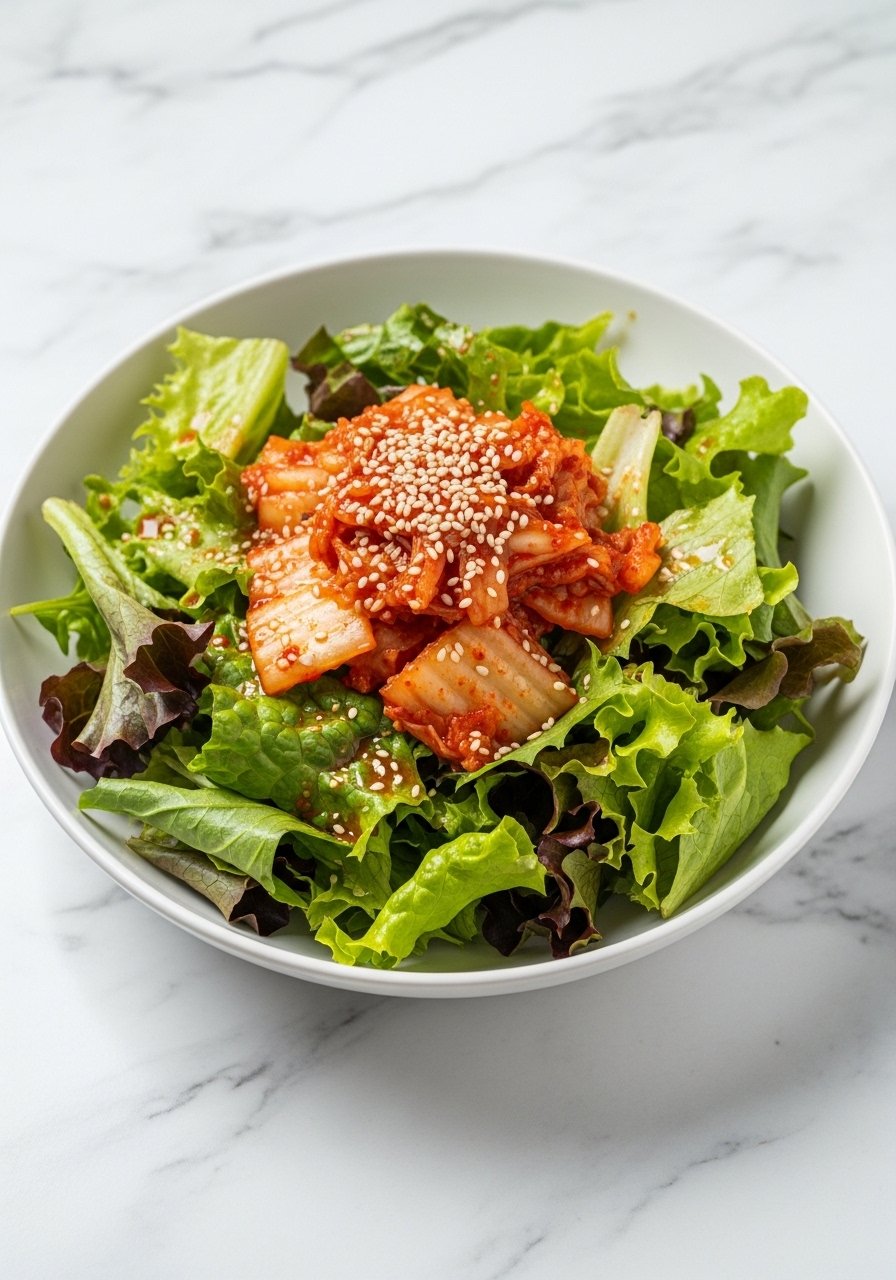
For a lighter option, toss chopped kimchi with greens, cucumber, and a sesame-dressing for a quick, flavorful salad.
Ingredients
- 2 cups mixed greens
- 3/4 cup chopped kimchi
- 1/2 cucumber, thinly sliced
- 2 tbsp sesame oil
- 1 tbsp rice vinegar
- 1 tsp soy sauce
- 1 tsp sugar
- 1 tbsp toasted sesame seeds
Instructions
- Whisk sesame oil, vinegar, soy, and sugar.
- Toss greens, cucumber, and kimchi with dressing.
- Sprinkle sesame seeds and serve immediately.
How to Serve It
- Serve as a starter or side with grilled proteins.
- Keep in salad containers and dress just before serving.
25. Kimchi with Toasted Sesame & Chili Crisp — Crunchy Finish
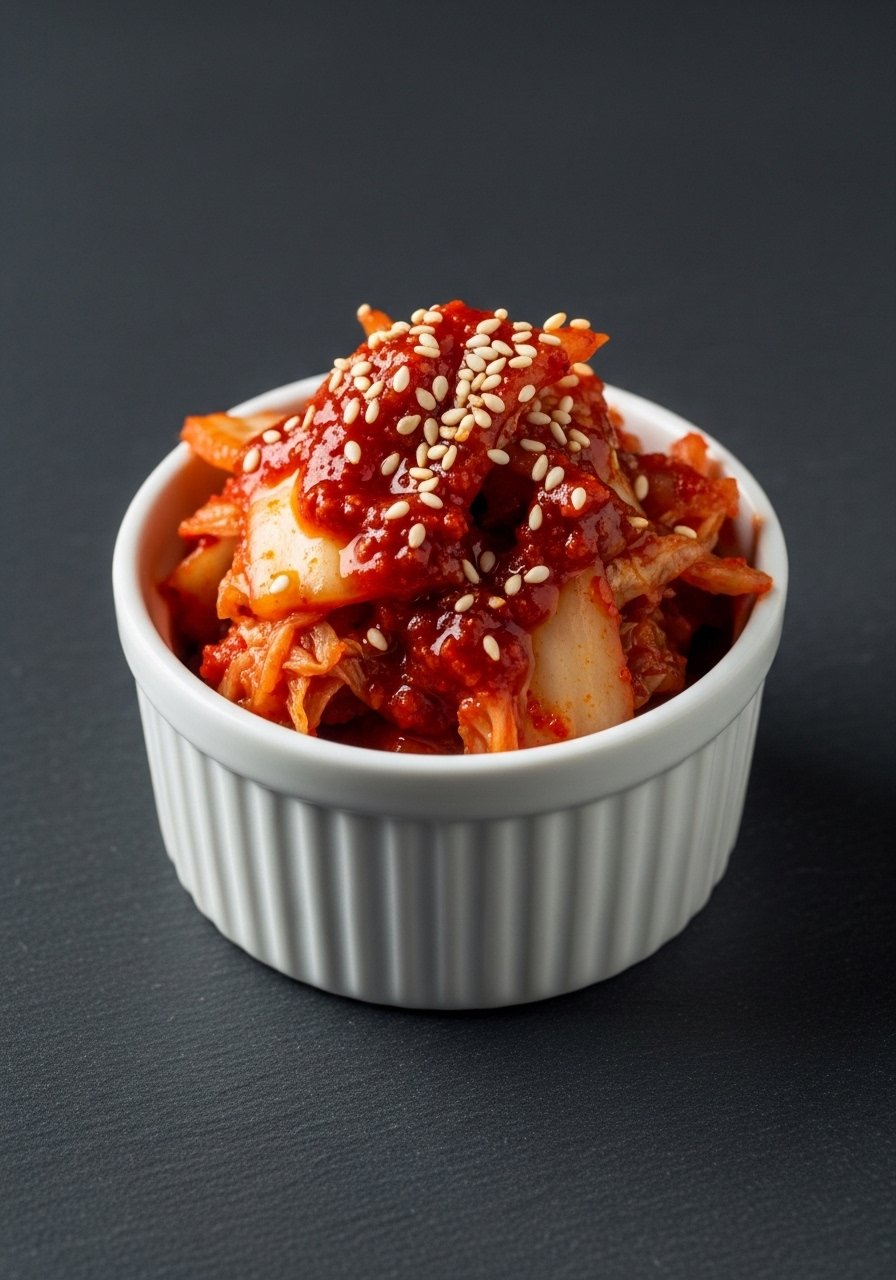
Add a finishing drizzle of chili crisp for texture and smoky crunch. It’s a quick upgrade for serving.
Ingredients
- 2 cups chopped kimchi
- 2 tbsp chili crisp
- 1 tbsp toasted sesame seeds
- 1 tsp sesame oil
- 1 scallion, chopped
Instructions
- Toss kimchi with chili crisp, sesame oil, and seeds.
- Garnish with scallions and serve.
How to Serve It
- Spoon over rice bowls, noodles, or grilled tofu.
- Store in small glass jars.
26. Fermented Garlic Scape Kimchi — Seasonal Spring Treat
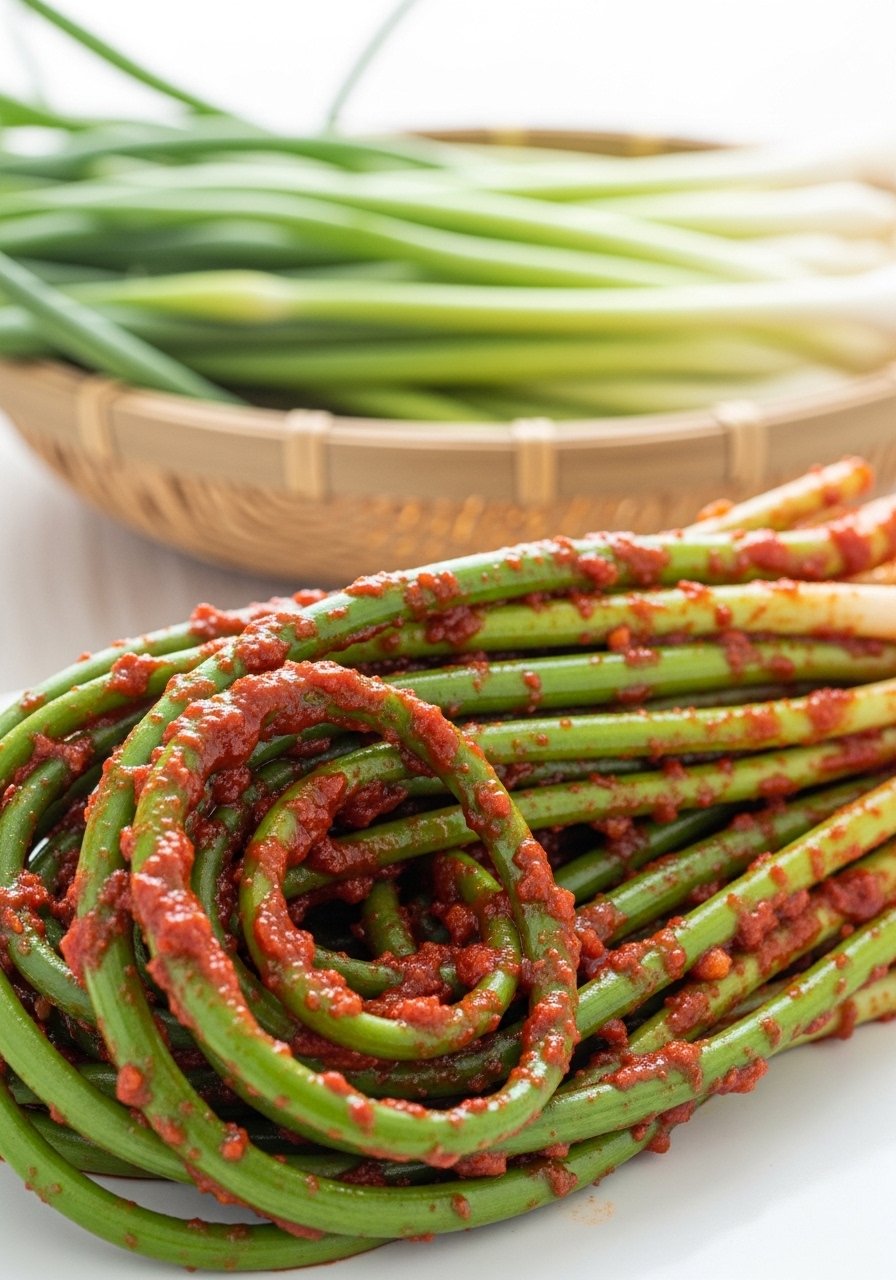
Garlic scapes are seasonal and make a fragrant, garlicky kimchi with a great snap. Ferments quickly and is lovely on toast or in stir-fries.
Ingredients
- 1 lb garlic scapes, trimmed
- 2 tbsp coarse salt
- 1/3 cup gochugaru
- 2 tbsp fish sauce
- 3 cloves garlic, minced
- 1 tsp sugar
- 1 tbsp sesame oil
Instructions
- Toss scapes with salt; rest 30 minutes then drain.
- Mix gochugaru, fish sauce, garlic, sugar, and sesame oil.
- Coat scapes and pack into jar; ferment 2–4 days.
How to Serve It
- Chop and add to scrambled eggs or stir-fry.
- Store in airtight jars up to 3 weeks.
27. Smoked Kimchi — Charred Complexity
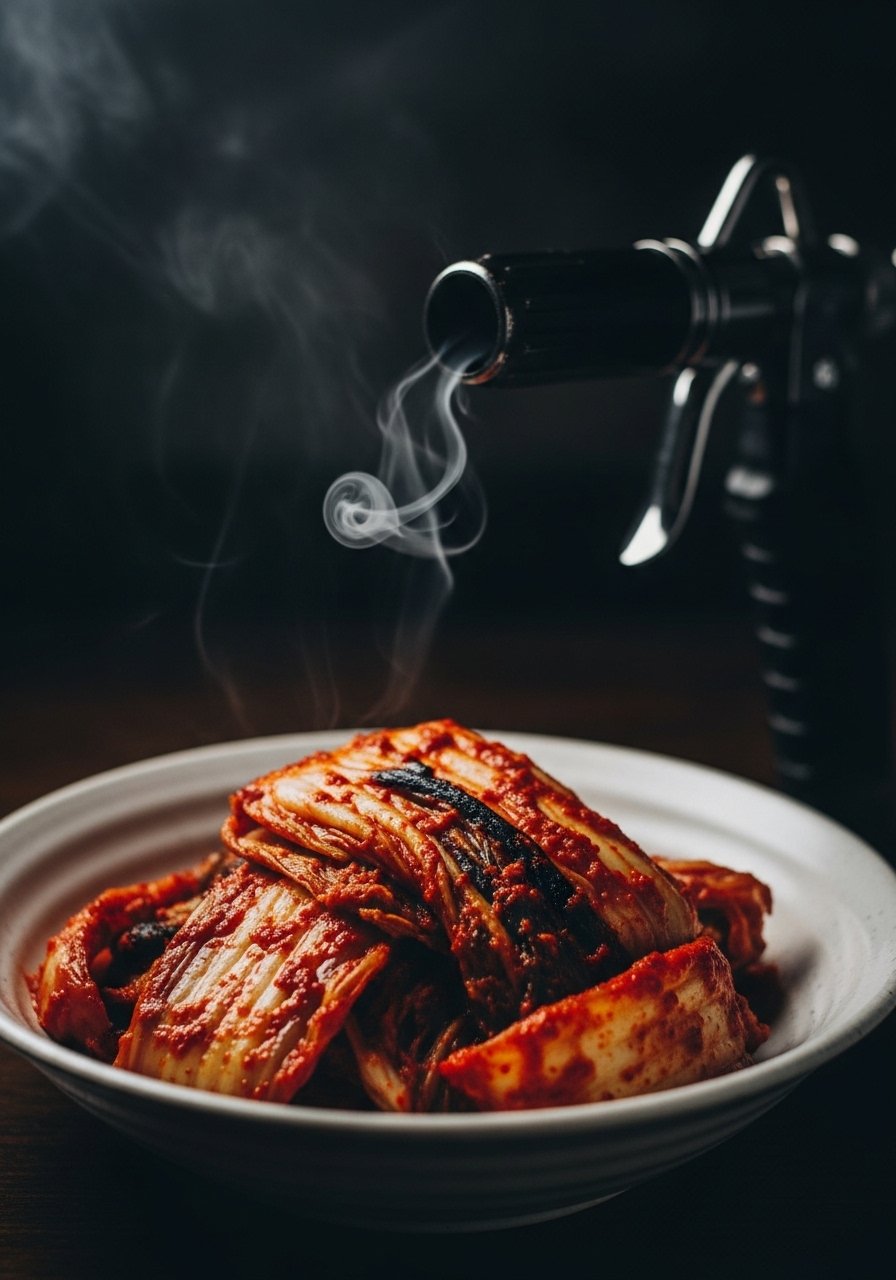
Smoking adds a unique depth to kimchi—subtle char, aromatic complexity, and an adventurous twist on the traditional kimchi recipe. Use a smoking gun or a quick stovetop smoke.
Ingredients
- 1 head Napa cabbage
- 1 cup coarse salt
- 8 cups water
- 1/2 cup gochugaru
- 1/4 cup fish sauce
- 4 cloves garlic
- 1 inch ginger
- 1 pear, grated
- 1 tbsp sugar
Instructions
- Brine cabbage 2–3 hours, rinse and drain.
- Prepare kimchi paste and coat leaves as usual.
- Pack into jar. Use a smoking gun to lightly smoke the packed jar for a few minutes (follow tool directions).
- Ferment 2–6 days, chilling when desired.
How to Serve It
- Serve with grilled meats and smoky stews.
- Store in airtight glass jars.
You’ve just scrolled through 27 ways to make authentic traditional kimchi recipe variations—classics, regional styles, quick fridges, and creative spins. Try a few small batches to see which flavor profile you and your family prefer. Pin this post so you can come back when you’re ready to mix paste or pack jars, and share your favorite with friends—kimchi is more fun when it’s communal. If you make several batches, a set of glass fermentation jars and a reliable chef’s knife will simplify prep and storage. Which version will you try first?