You love spicy, tangy kimchi but worry it's hard to get right. If you've tried store-bought jars and wanted fresher, cheaper, and more customizable flavor, this guide shows you how to make kimchi at home with simple everyday ingredients and realistic timing.
The secret to consistent results is measuring and the right jars—use a digital kitchen scale for salt ratios and transfer your batch to mason jars or a fermentation jar set for safe, easy storage. You'll save money and control spice, salt, and texture.
Read on for step-by-step prep, exact salt and paste amounts, packing tricks, fermentation timing, and storage tips so you can make kimchi at home and serve it in a week or enjoy it aged for months.
Preparing Your Ingredients
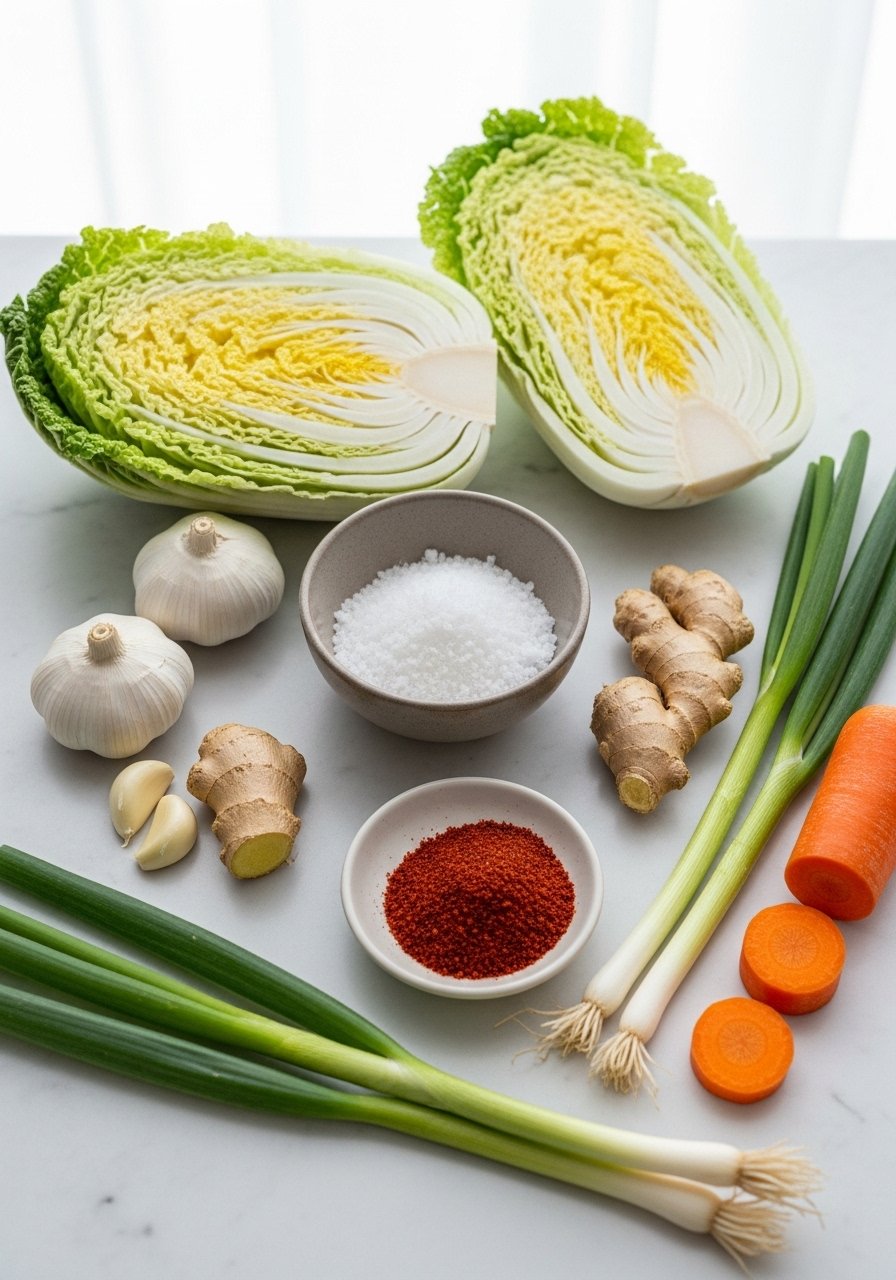
Start with about 2 medium napa cabbages (about 4–5 lb total)—this yields roughly 8–10 cups of finished kimchi. Rinse and quarter the cabbages, then cut into bite-size pieces.
- Use a sharp chef's knife and a stable cutting board to speed prep.
- For mixing, a large mixing bowl works best so everything can be massaged evenly.
You'll also need 1/2–3/4 cup kosher salt, 1 cup gochugaru (Korean chili flakes) for medium heat (adjust to taste), 1/4–1/2 cup fish sauce, 6–8 cloves garlic, 1 thumb-sized ginger, plus 1 carrot and 1/2 daikon radish for crunch.
Salting, Rinsing, and Draining Cabbage
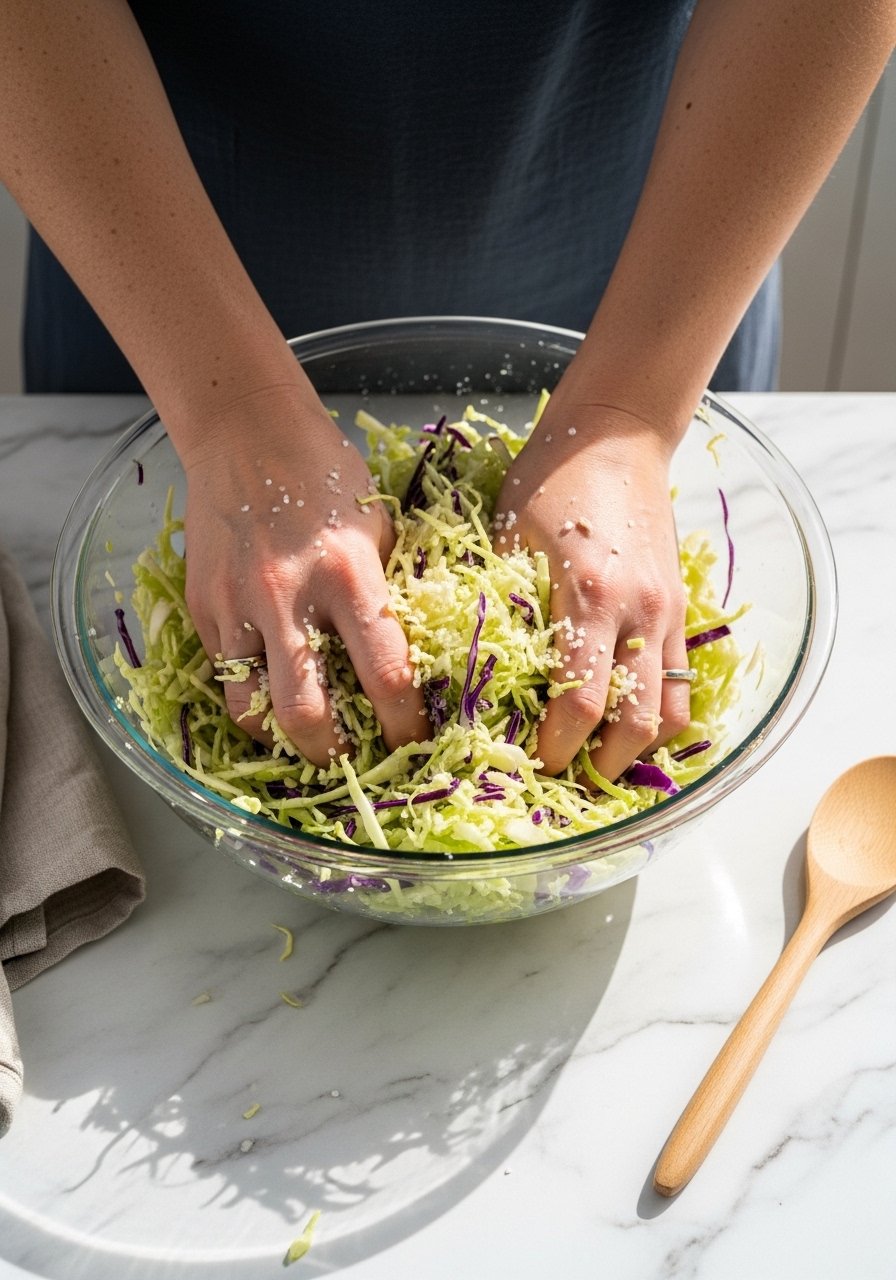
Salting draws water out and softens leaves so the paste penetrates.
- Layer cabbage in your bowl and sprinkle kosher salt between layers—about 1/2 cup for 4–5 lb total.
- Let sit 1–2 hours, tossing every 30 minutes until leaves are limp and flexible.
- Rinse cabbage thoroughly 2–3 times until saltiness is reduced, then drain in a colander for 20–30 minutes.
Tip: Use a kitchen scale to confirm weight if you’re scaling the recipe. Over-salting will produce overly salty kimchi; under-salting can slow fermentation.
Mixing the Kimchi Paste and Packing Jars
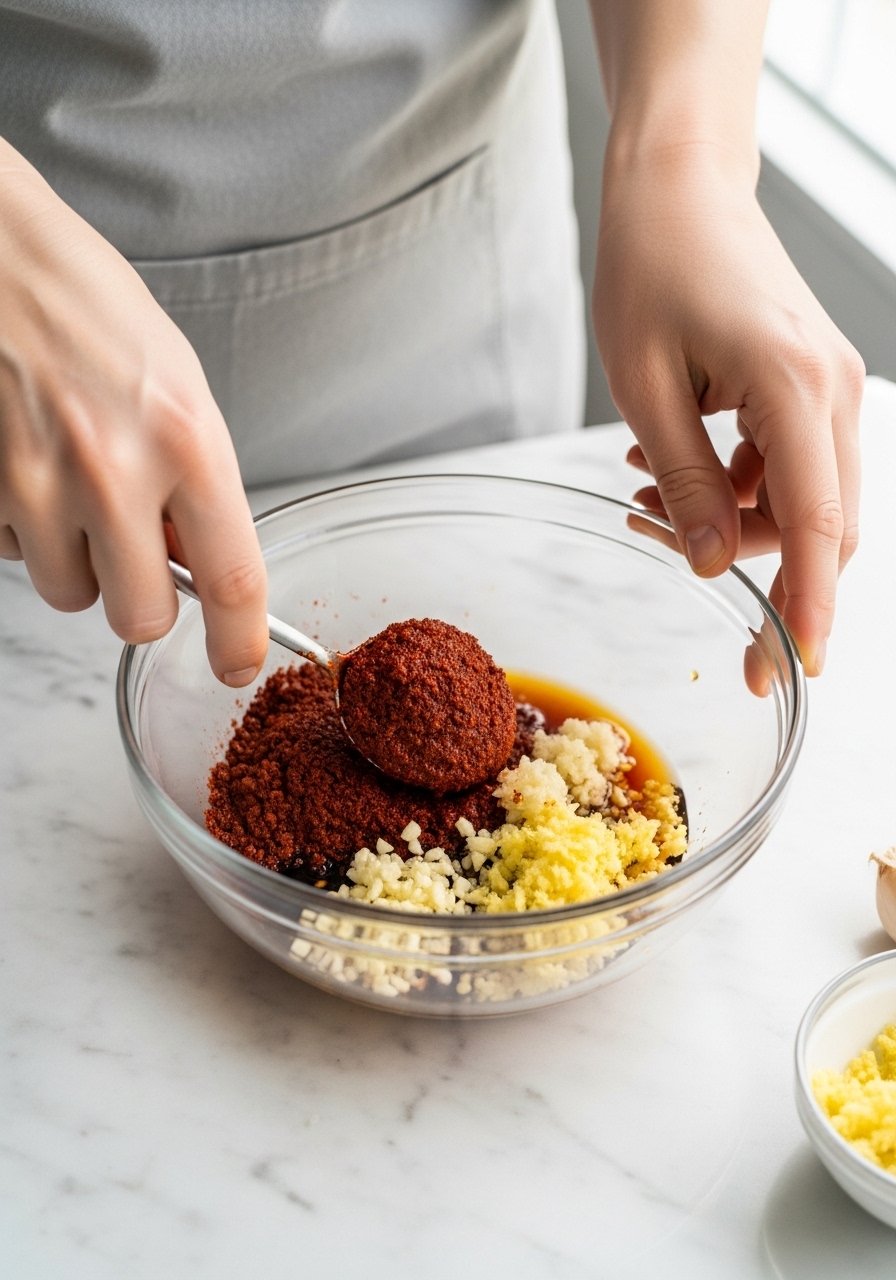
Make the paste, then coat every leaf well.
- In a bowl, combine 1 cup gochugaru, 1/4–1/2 cup fish sauce, 6 cloves minced garlic, 1 tbsp grated ginger, 1 tbsp sugar, and a splash of water to loosen.
- Add julienned carrot, daikon, and chopped green onions; mix into the drained cabbage with a silicone spatula until evenly coated.
- Wear nitrile gloves if you want to protect your hands and avoid lingering chili oils.
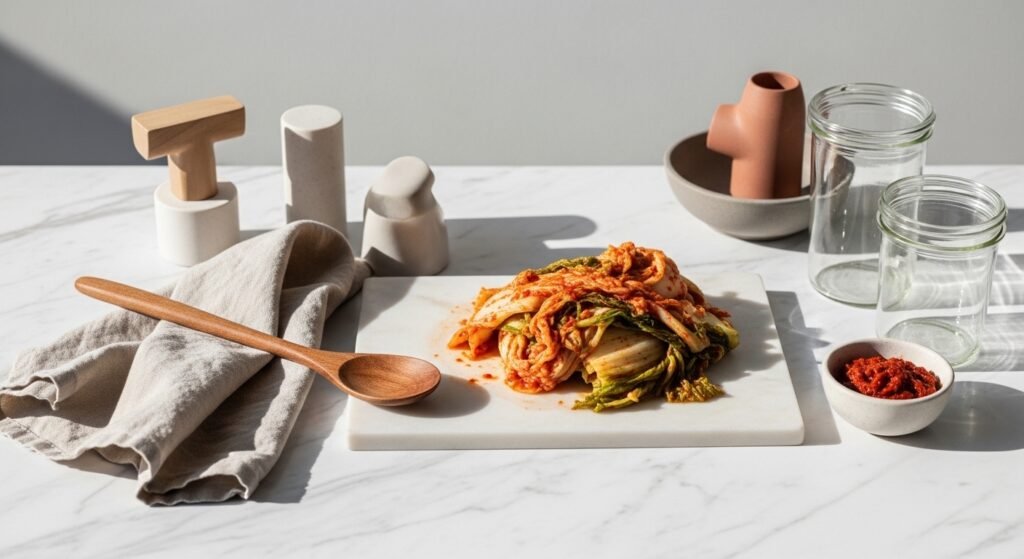
Pack tightly into a fermentation jar set or heavy mason jars, leaving 1–2 inches headspace. Press down to remove air pockets; use fermentation weights or a small glass jar to keep vegetables submerged.
Fermentation Times, Storage, and Serving
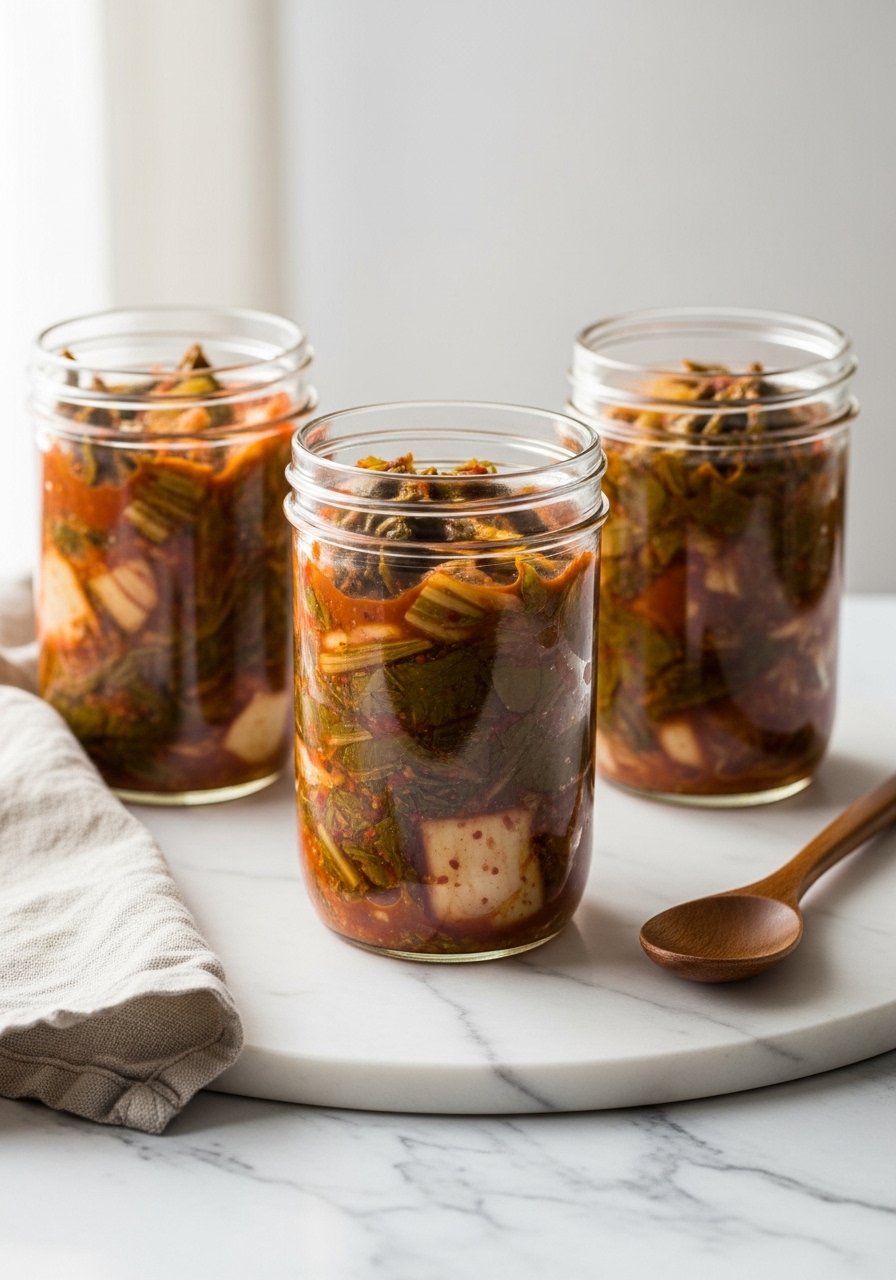
Fermentation timing affects flavor and texture.
- Leave jars at room temperature (65–75°F) 24–48 hours to kick-start fermentation—check daily and “burp” if pressure builds.
- Move to the fridge after initial fermentation. Taste at 1 week; many people prefer it after 2–3 weeks when flavors round out.
- Store in glass storage containers or mason jars in the fridge—kimchi keeps well 2–3 months, sometimes longer as flavor intensifies.
Quick serving ideas: top rice bowls, mix into fried rice, add to stews, or enjoy as a side. If you want faster tang, let a small jar ferment 3–5 days at room temp.
Final tips:
- Keep vegetables submerged to avoid mold.
- If anything smells rotten or has fuzzy mold, discard.
- Freeze small portions for long-term storage.
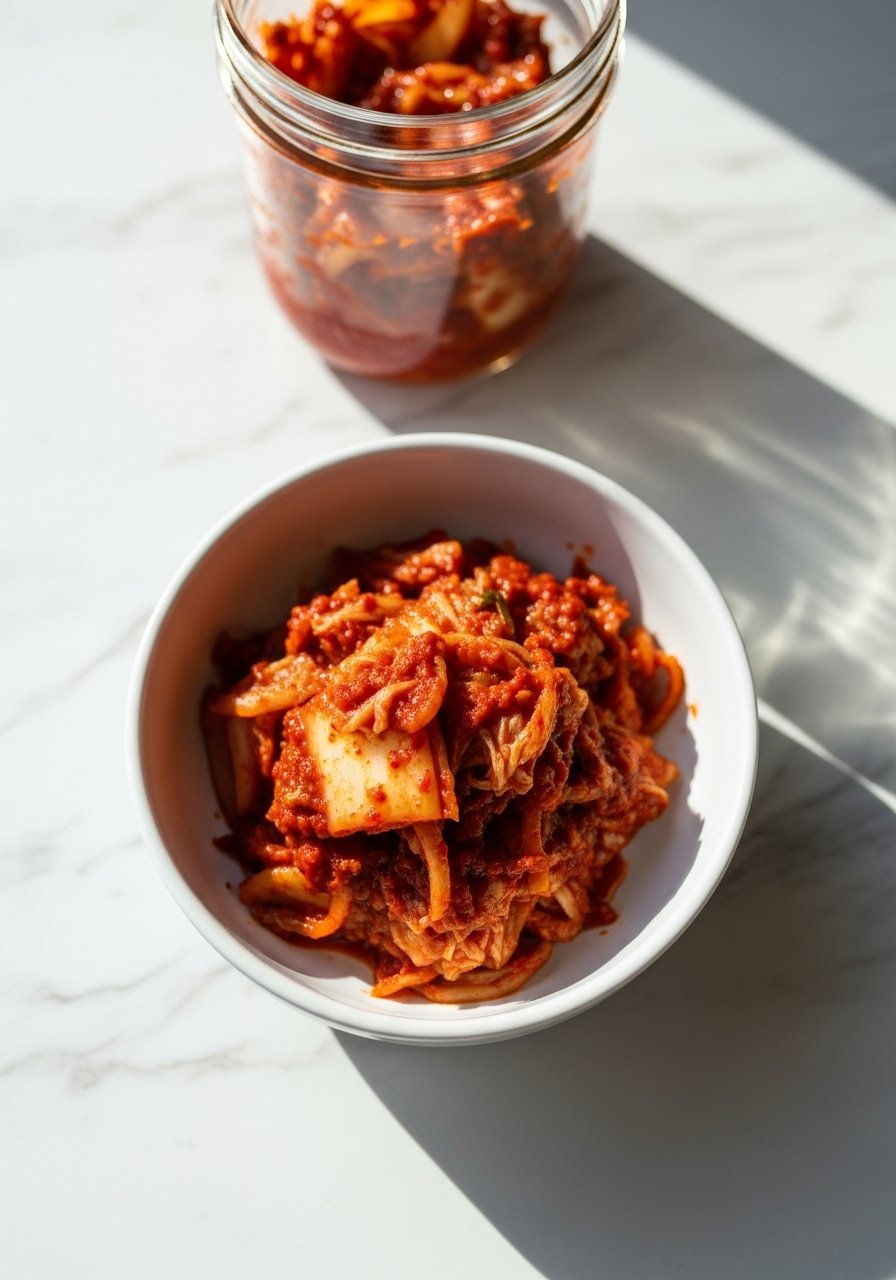
Mason jars and a scale will make your first few batches stress-free—once you get comfortable, you’ll adjust spice and salt to your liking. Pin this guide for your first batch and save a link to your favorite mason jars to get started quickly. Which flavor twist will you try first?